
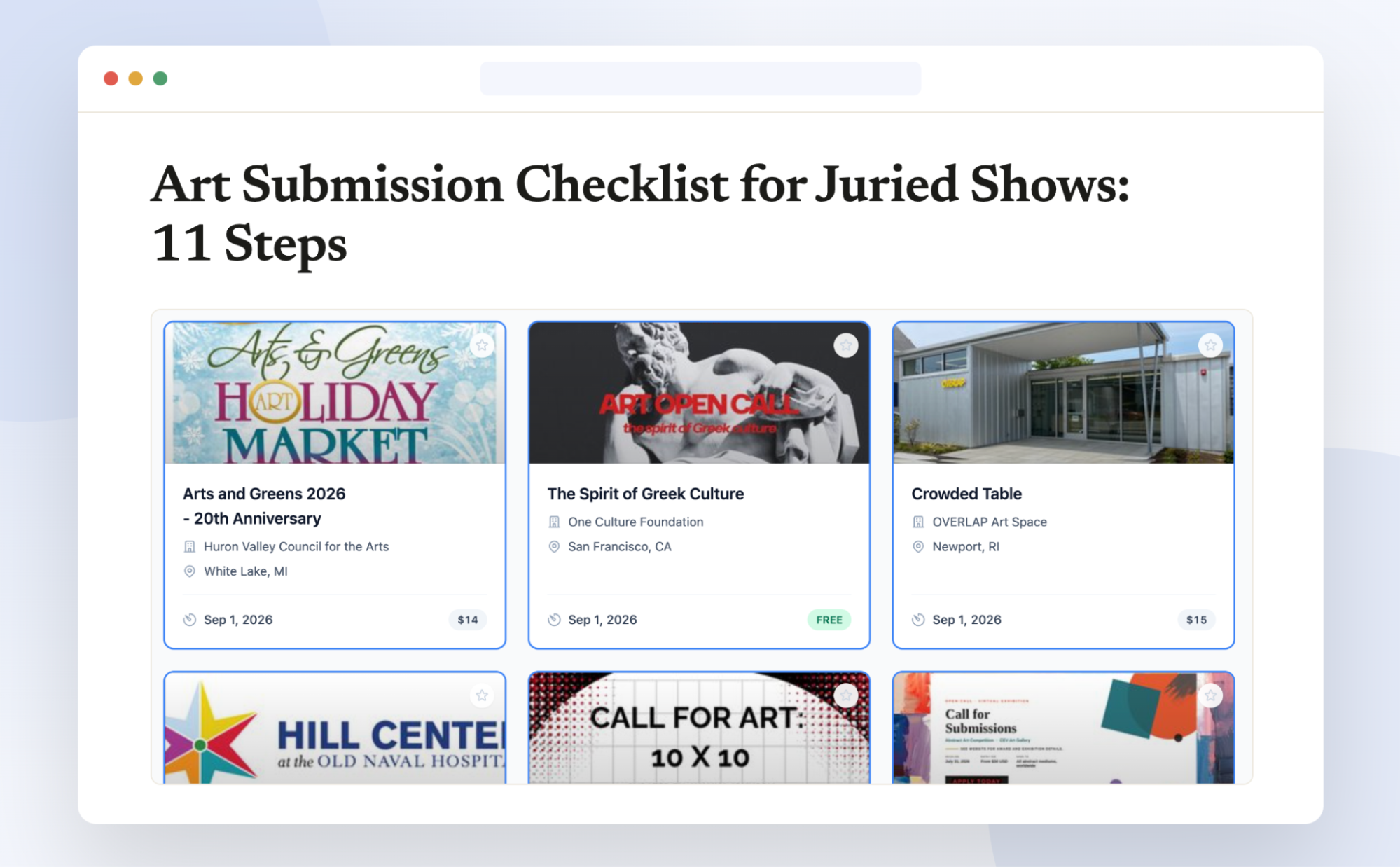
Artists who submit 30 or more days before a deadline are accepted at 71.4%. Artists who submit one day before are accepted 59.3% of the time.
That's a 12-point difference. And if you've ever put together an art show application at the last minute, you probably know how quickly the small things add up: finding the right images, checking dimensions, updating your statement, and making sure everything actually fits the call.
We analyzed 48,567 judged entries across 2,604 calls to find the best time to apply for art calls. Now we want to go further and show you exactly what to prepare.
How We Put This List Together
This checklist comes from three places we deal with every day at EntryThingy:
- our own jurying data across hundreds of shows
- conversations with gallery directors about what makes applications fall short
- feedback from artists about what they wish they'd prepared sooner
We've combined all of that here into a practical checklist you can use before your next deadline.
For a deeper look at acceptance rates by medium, experience level, and jurying model, see our art call acceptance rates study.
Quick Checklist
- Research the juror, gallery, and organizer for red flags before anything else. Most artists never look up the juror before applying, and it's one of the most common rejection causes.
- Save the submission deadline immediately. Artists who submit 30+ days early are accepted at 71.4% vs 59.3% for last-minute submitters.
- Select cohesive pieces that fit the call, and leave out anything that's already sold. Take a look at strong submissions for reference.
- Photograph your artwork for digital jurying using natural light and a clean background, then run it through Pixel Prep to get it properly sized and formatted.
- Tailor your artist statement to the submission. If it could apply to any artist, it isn't doing its job, so it helps to check real statement examples from working artists.
The 11-Step Checklist: Every Step With Context
1. Check Eligibility and Accepted Mediums Before Choosing Your Work
First thing to consider is that many applications get disqualified because the artist simply did not meet the basic requirements.
Check the location, career stage, accepted mediums, and whether previously shown work is allowed. If you don't meet one of those requirements, it's better to know now than after you've spent hours putting the application together.
This also helps you avoid spending an entry fee on a call where your work was never eligible in the first place.
For more information, you can check our guide on how to apply to art calls before you commit.
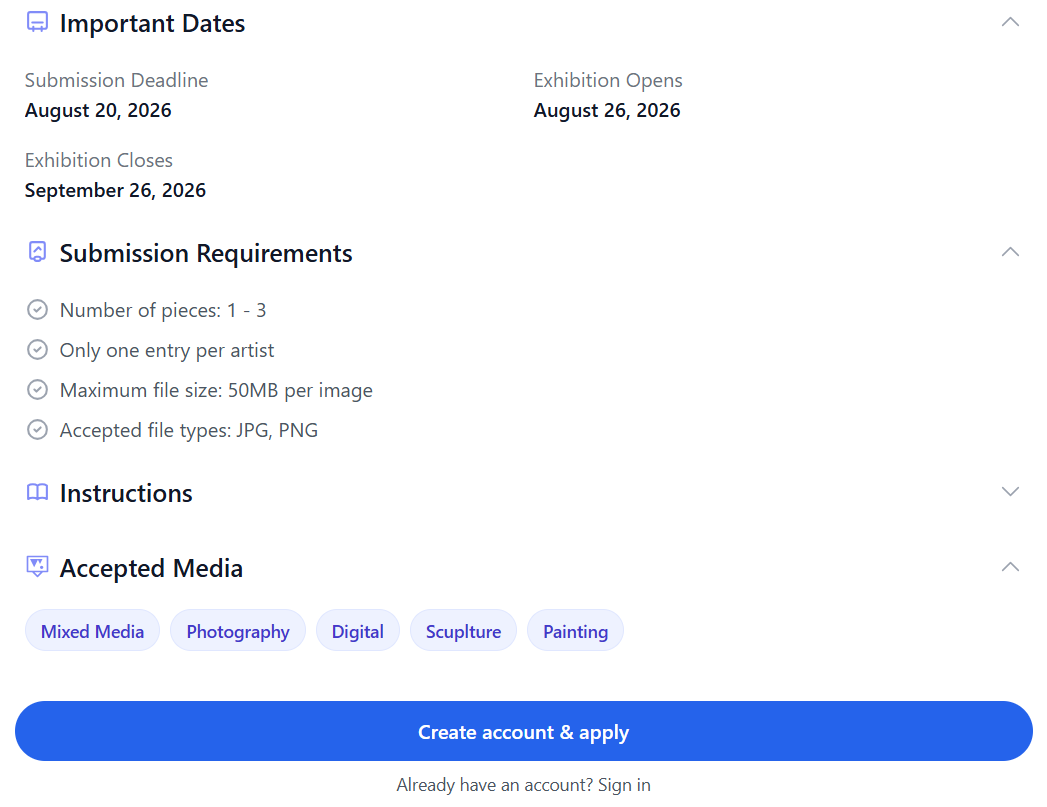
On EntryThingy, we make this part easier by showing the eligibility requirements, accepted mediums, entry fee, and exhibition dates directly on each call. Check those first, then decide if the opportunity is worth your time.
2. Research the Juror, Gallery, and Organizer
Before committing time or money to an application, spend 20 minutes researching who is running the show and whether it is worth applying to.
Start with the juror. Look at the work they make, exhibitions they've curated, and the kinds of artists or themes they tend to work with. You're not trying to change your work to please a juror. You're simply trying to understand whether there is a genuine connection between what you make and what they tend to respond to.
Then look at the gallery itself. Browse a few past exhibitions on their website or Instagram. What kind of work do they usually show? Does your work feel like it could belong there? If their last five exhibitions went in a completely different direction from your practice, that's useful to know before you spend time and money applying.
Also check the organizer itself for red flags. A legitimate call should make it easy to understand who's behind it, who is jurying the work, what you're paying for, and what happens if you're selected.
You can check our guide on how to spot scam calls for art or browse our list of trusted art call platforms if you're looking for legitimate opportunities.
On EntryThingy, we show the juror's name, background, and bio on the call page whenever that information is provided, so you can do this research before you apply. You can click the gallery's name under Organization to open its organizer profile.
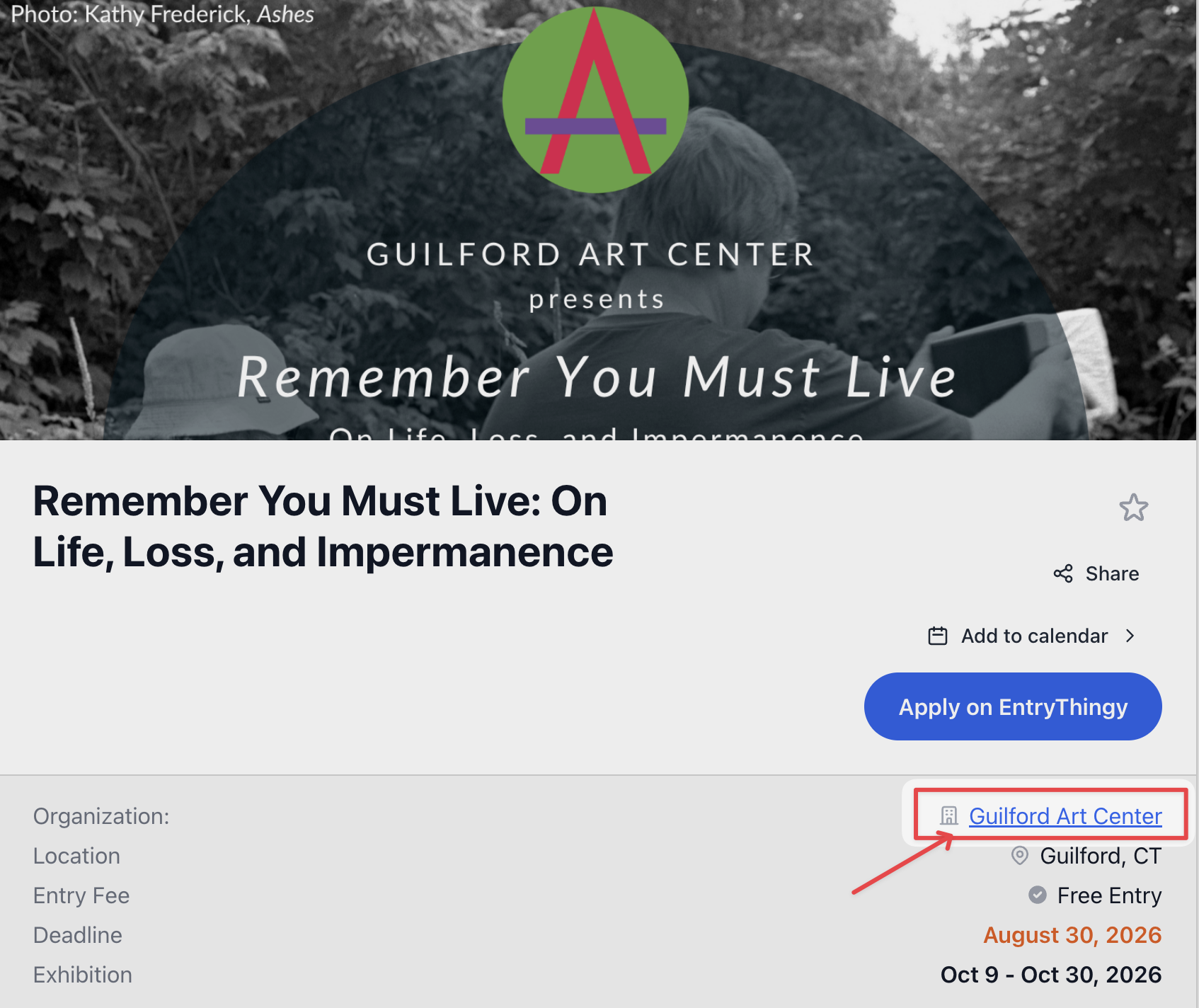
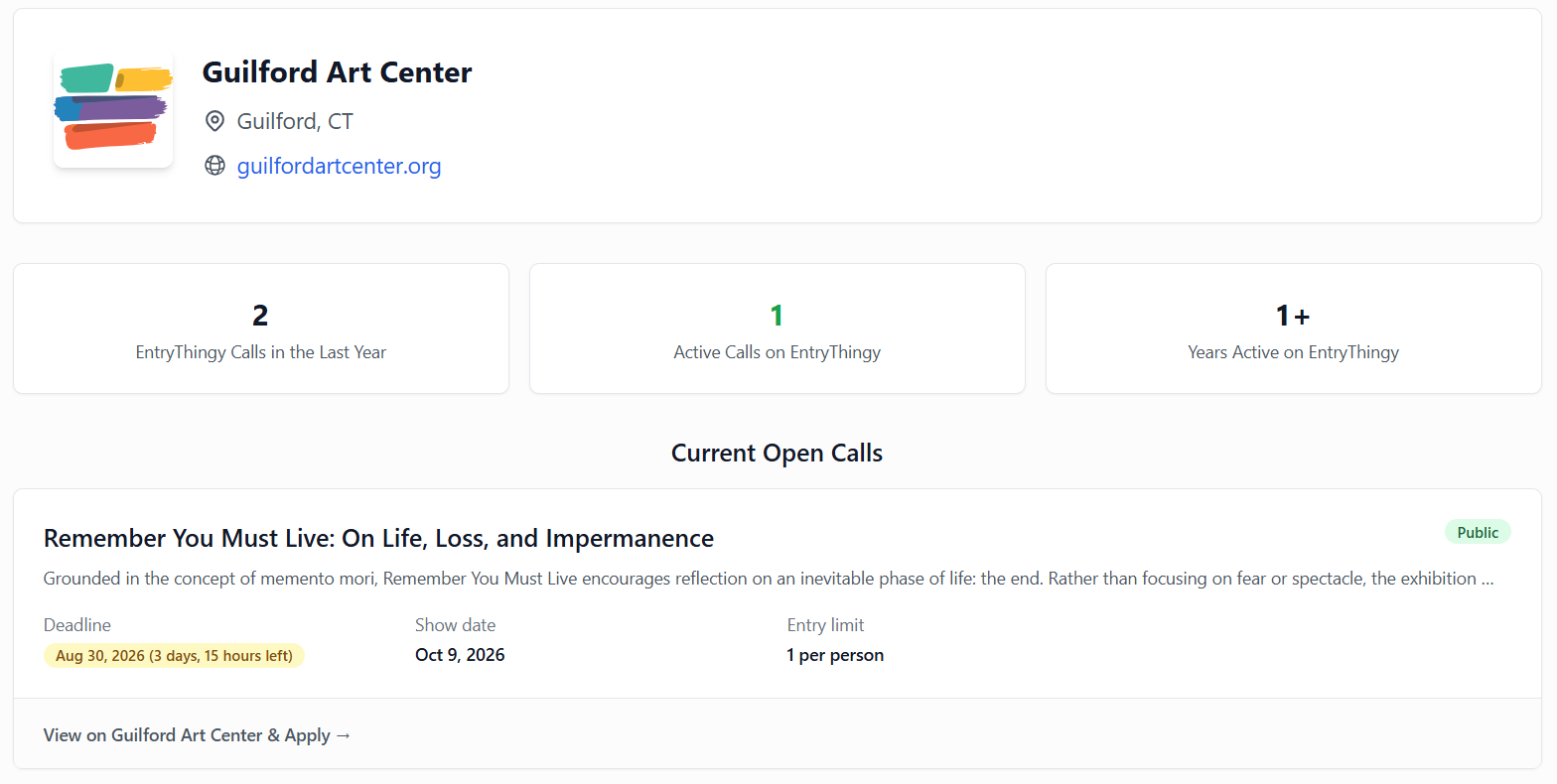
There, you'll find its location, website, current open calls, how many calls it has posted in the past year, and how long it has been active on EntryThingy. It will give you more context about the gallery before deciding whether to apply.
3. Calculate the Entry Fee and Additional Costs
Entry fees are only part of the cost. Shipping, crating, insurance, and return shipping for unsold work can add up quickly, especially for larger pieces.
That's why it's worth looking at the full potential cost before you commit. Our art call entry fees study shows that average entry fees range from $17.70 on the West Coast to $31 in the Deep South, with fiber art and printmaking averaging $25 due to higher handling requirements.
You can use those numbers as a reference point when evaluating a call. If the fee seems unusually high for the opportunity, take a closer look at what you're getting for it and whether the show makes sense for you.
4. Save the Deadline and Start Preparing 30 Days Early
Once you decide to apply, add the deadline to your calendar and work backward from it. Give yourself time to choose your pieces, prepare the images, update your statement, and review the full application before submitting.
Submitting early does not mean the juror sees your work first. Most shows review applications after the deadline closes. The advantage is having enough time to improve each part of your submission, which helps explain why early applicants have a higher acceptance rate.
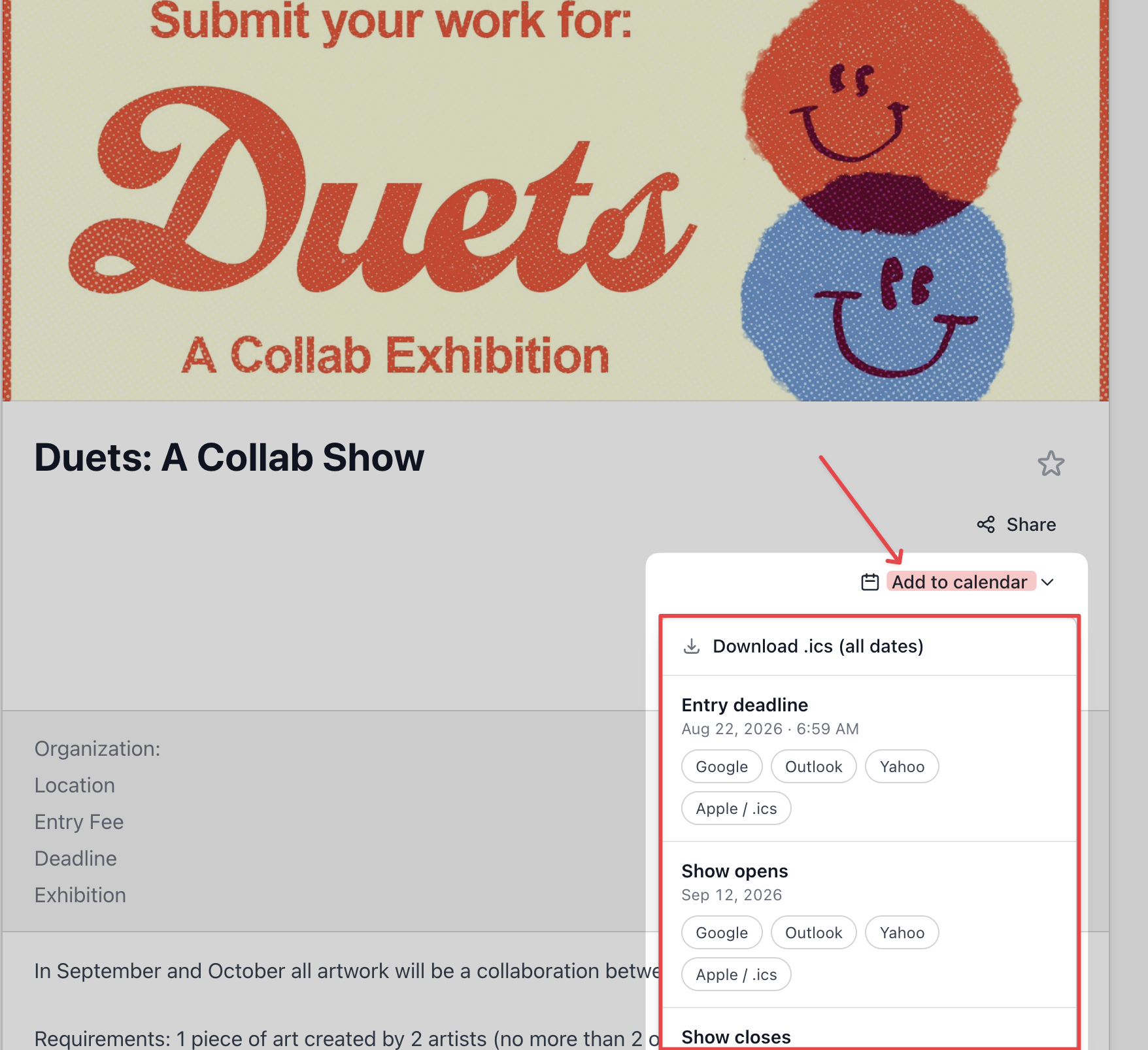
Every call page on EntryThingy includes an "Add to calendar" button. You can save the entry deadline, show opening date, and show closing date directly to Google, Outlook, Yahoo, or Apple Calendar. You can also download one file containing every date.
5. Select Cohesive Pieces That Fit the Call
This is where most portfolio mistakes happen. Artists choose pieces based on how much they like each one individually, rather than how well they work together and how well they fit the call.
A submission that jumps between unrelated styles, mediums, and subjects gives a juror nothing to hold onto. The pieces don't need to look identical, but they should feel like they came from the same artist.
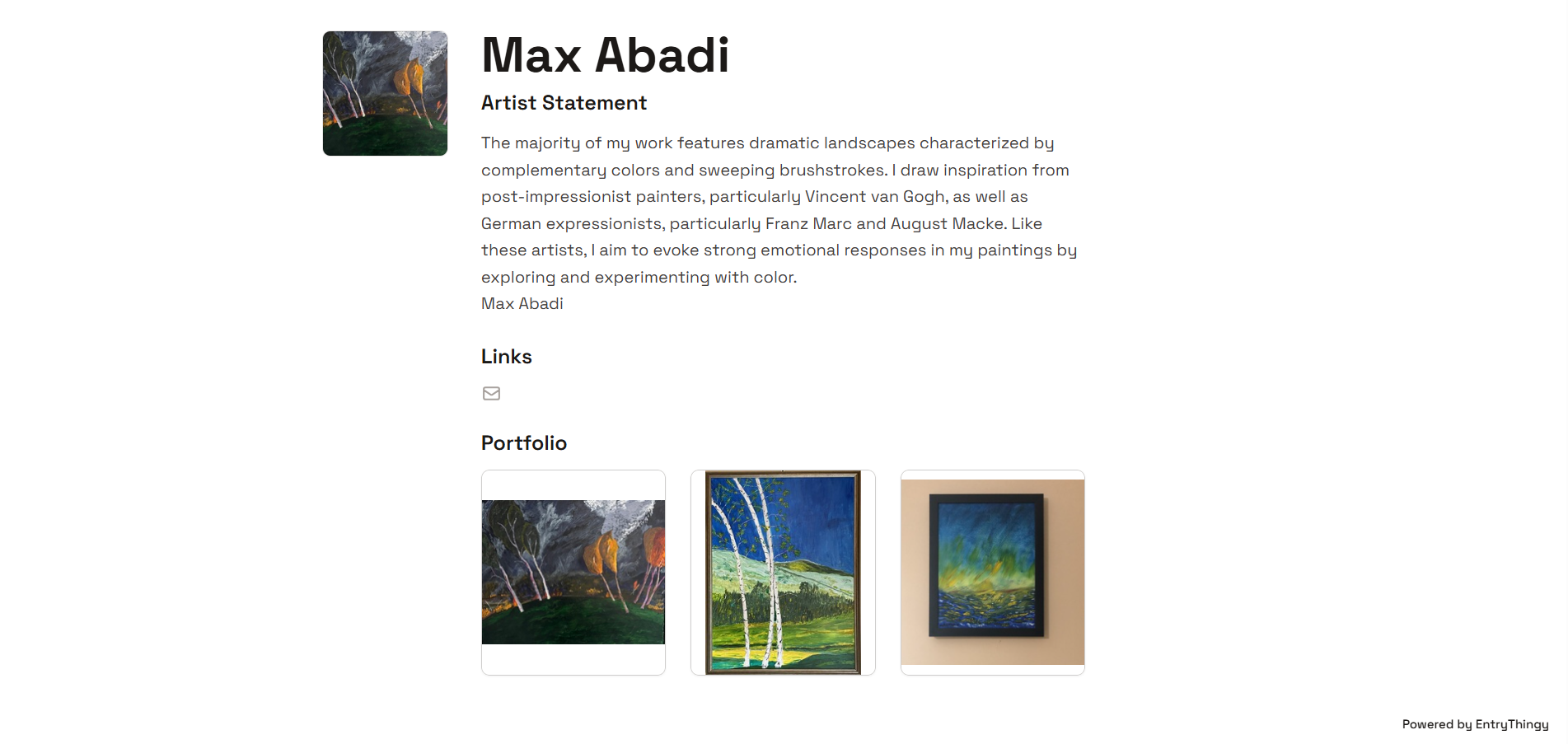
Here's an example of that kind of consistency in artist Max Abadi's portfolio: the landscapes share the same color palette, brush style, and mood, so it's easy to tell they came from the same hand. That's the kind of cohesion worth aiming for when you're choosing which pieces to submit together.
You shouldn't include work that's already been sold either. If a piece isn't available, leave it out of the application.
If you want to see how other artists put their submissions together, you can browse over 6,000 public profiles on EntryThingy and look at how working artists group their pieces.
6. Photograph Your Artwork for Digital Jurying
In digital jury review, a juror evaluates your submission on a screen before they see your work in person. That's why a low quality photo can eliminate strong work before a juror even reads your statement.
Use natural light from a window or a neutral white light source positioned on either side of your artwork. You should also remove glass from framed work before photographing. Reflections are difficult to fix later, even with editing.
Make sure yours does not have any of these:
- Uneven or harsh lighting that flattens the work
- Visible surroundings: studio walls, easels, table edges, outlets
- Cropping that cuts off edges or leaves too much dead space
- Low resolution that looks soft or blurry at full screen
- Color casts that shift the actual tones of the piece
7. Resize and Format Images to the Required Specifications
Most calls specify JPEG format with a minimum of 1920px on the longest side and a file size under 5MB.
If you are shooting on a phone, always convert from HEIC to JPEG before uploading. Keep in mind that HEIC is a file format most submission platforms do not accept.
Also you should never upscale a small image to meet dimension requirements. It adds pixels but not detail, and it shows.
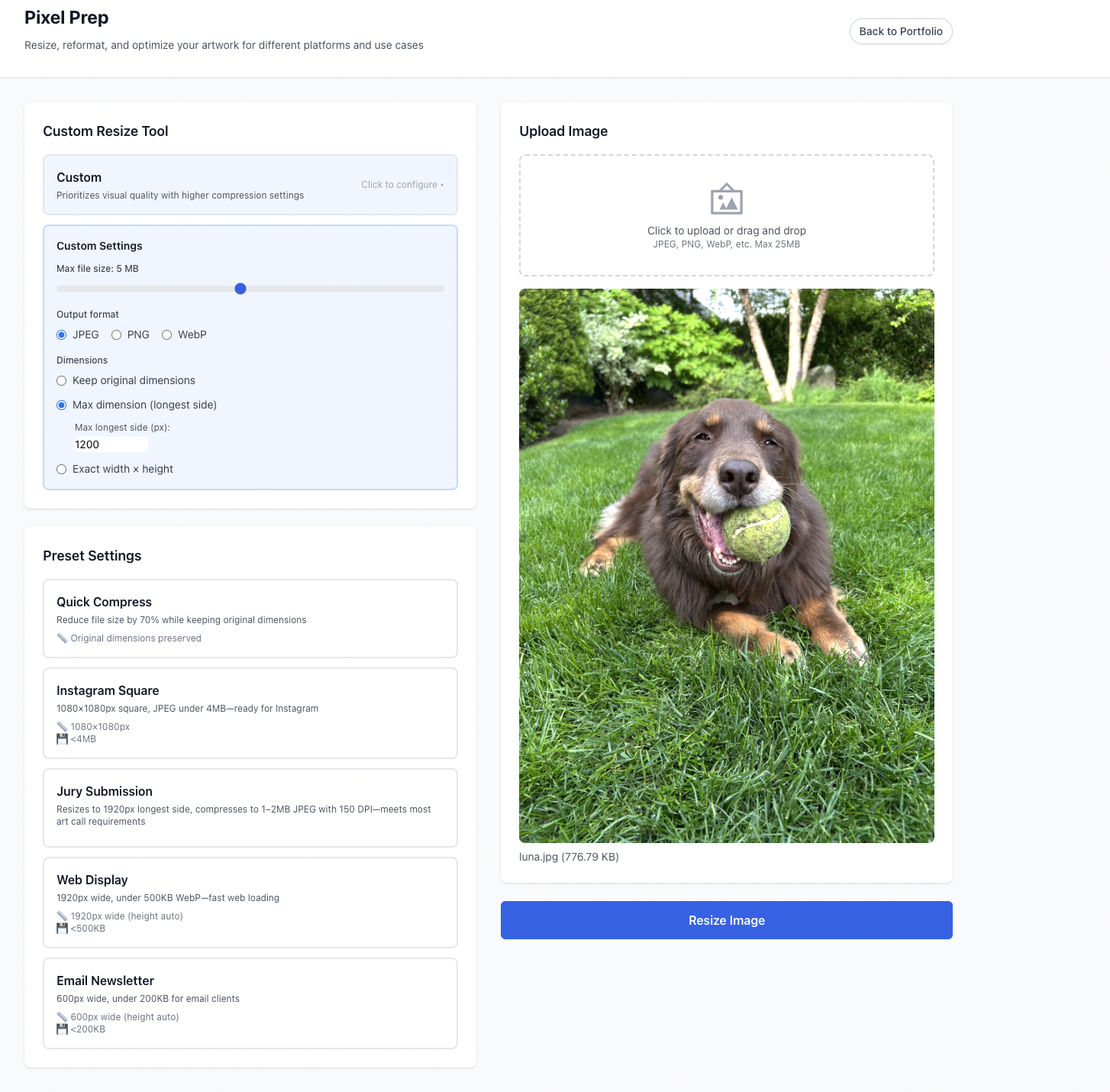
EntryThingy's Pixel Prep tool handles this automatically. Built directly into your portfolio under My Art → Portfolio → Pixel Prep, the Jury Submission preset resizes your image to 1920px on the longest side and compresses it to a 1-2MB JPEG, which meets the requirements for most art calls.
One final check before uploading: some calls require a specific file-naming format, such as LastName_FirstName_Title.jpg. Follow it exactly when one is provided. If there are no instructions, keep your file names simple and consistent so it is clear which image belongs to each piece.
8. Tailor Your Artist Statement to the Submission
Once your images are ready, your artist statement should help the juror understand what they're looking at and why these particular pieces belong together.
You don't need to explain everything about your practice. Start with the work you're actually submitting. What medium are you working in? What are you exploring? How do you make the work? And what connects these pieces?
A simple way to get started is to answer these three questions:
- My work is made in (medium) and focuses on (specific subject or place).
- I make it by (process), which produces (visual result).
- These pieces belong together in this submission because (what connects them).
Now take those answers and turn them into a short paragraph. Then read it again while looking at the pieces you're submitting. Does the statement help someone understand what they're seeing? If the answer is yes, you're already in a good place.
If you want to see how other artists approach this, we wrote a full guide on how to write an artist statement, including the most common issues we hear about from jurors.
9. Update Your Artist Bio and Resume
Your bio and resume are part of a complete portfolio submission. Leaving them out is one of the common reasons applications feel incomplete before a juror looks at a single image.
Your statement gives jurors context about the work they're looking at. Your bio helps them understand a little more about you and your background as an artist. Together with your resume, it gives them a fuller picture of your practice.
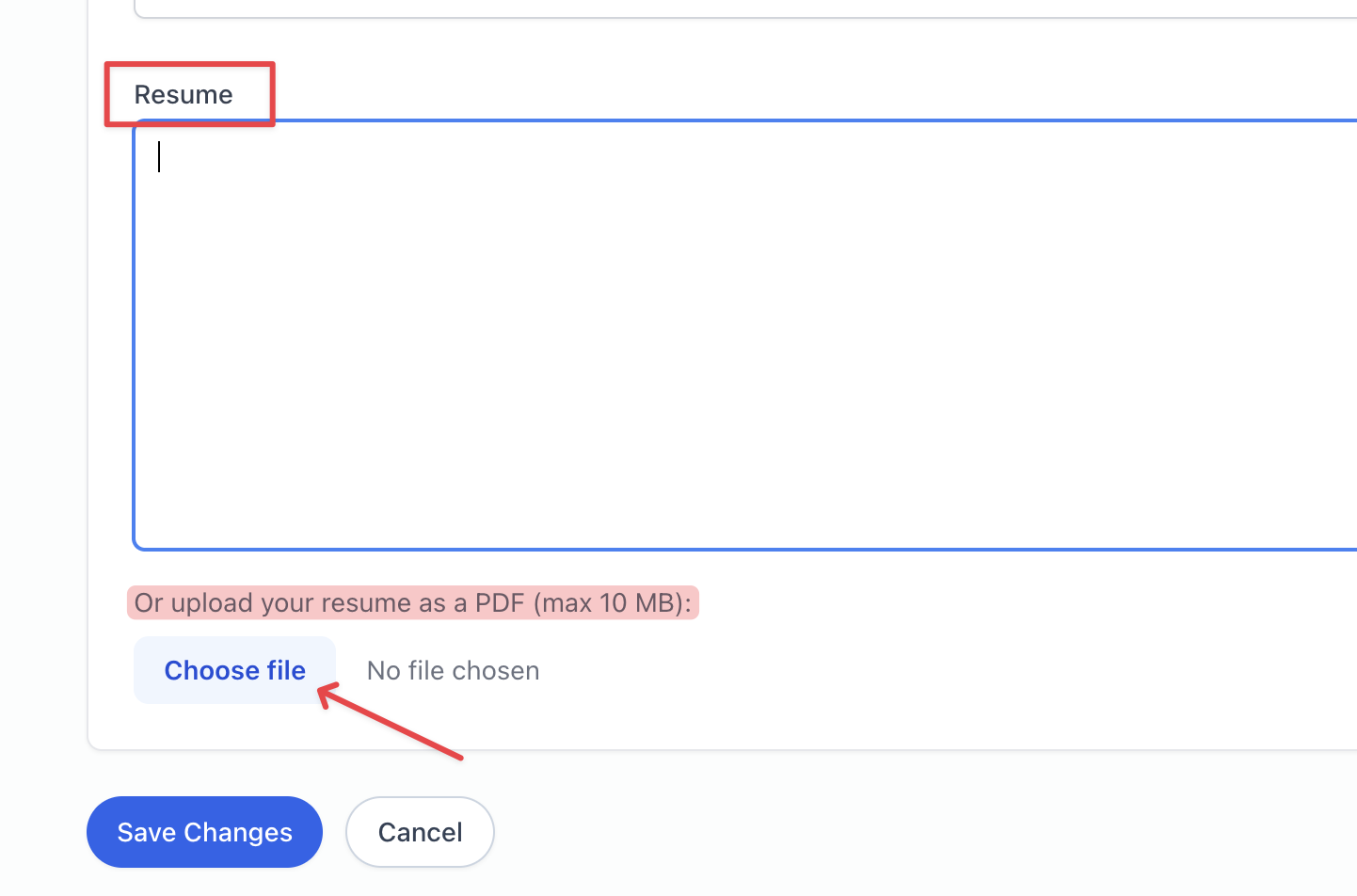
To update your resume on EntryThingy, go to My Art → Profile, then click Edit Profile.
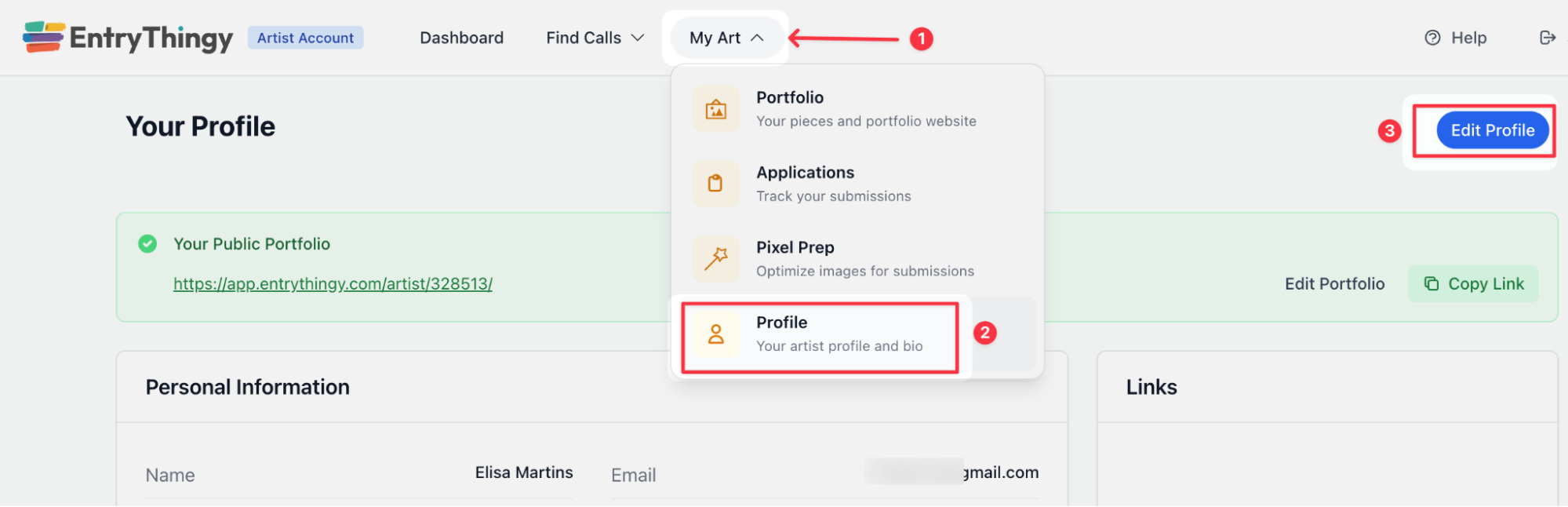
You'll find a Resume field there where you can type your resume directly or upload it as a PDF (max 10MB).
If it's been a while since you've updated either one, our artist bio examples and artist resume examples show how other artists structure theirs and what information is worth including.
10. Complete the Information for Every Artwork
For every piece you are submitting: title, medium, dimensions, year, price or mark it not for sale. Missing piece information makes the application feel unfinished and unprofessional before a juror evaluates the work itself.
If you use EntryThingy's portfolio, piece information is stored with each artwork and pulls automatically into every application. No re-entering the same details for every call.
11. Review the Complete Application Before Submitting
Do not skip this step when you are running short on time. It is the one that catches the most problems.
Go back to the original call description and check every requirement against what you have prepared: medium, number of pieces, file size, file format, word limits on your statement. One missed requirement can disqualify an otherwise strong application.
Then read your statement, bio, and piece descriptions out loud. Typos and unclear sentences are easier to catch that way. Ask another artist or someone outside your practice to look at the full application and tell you what they understand about your work from it. What feels obvious to you is often not obvious to a juror seeing your work for the first time.
What to Do After Submitting
After submitting, save the confirmation email. Keep a record of the call, the date you applied, and the amount you paid. You should also add the notification and exhibition dates to your calendar so you know when to expect a decision.
If you are accepted, you may need to confirm the terms, arrange shipping, and prepare your work quickly. To make that process easier, what happens after your art is accepted walks you through the next steps.
Most shows wait until the deadline closes before reviewing applications, so you may not hear back immediately. Use that time to find your next opportunity. If you are not accepted, look back at the submission and consider whether the call was a good fit, your images were strong enough, and your statement explained the work clearly.
Ready to apply again? Browse verified art calls and filter them by medium, location, or deadline.
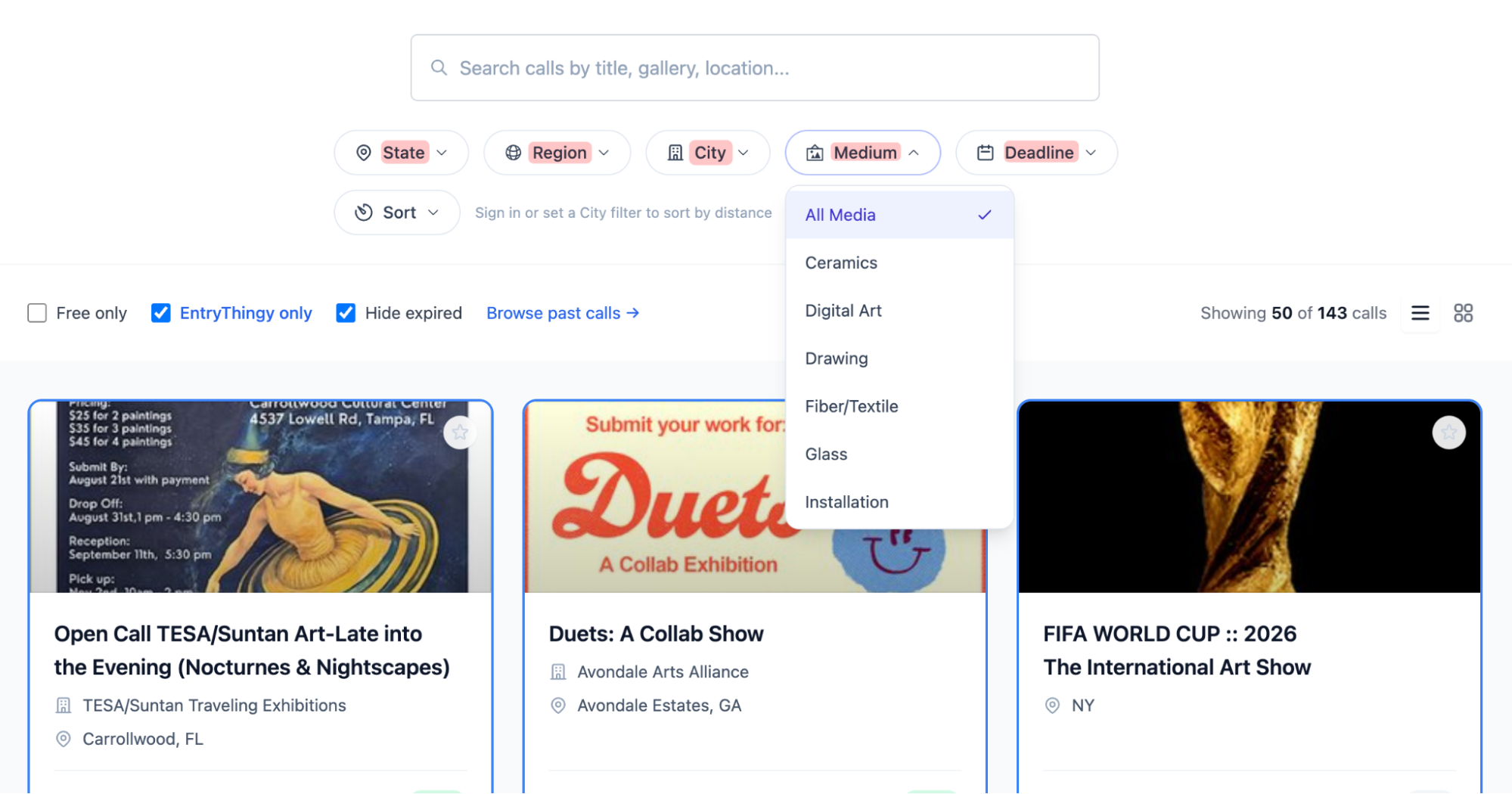
Ready to find your next opportunity? Browse verified art calls filtered by medium, location, and deadline.
Browse Art CallsFAQs
Does submitting early actually improve your chances?
Yes. Our data shows artists who submit 30 or more days before a deadline are accepted at 71.4%, compared to 59.3% for those who submit one day before. Most shows are reviewed after the deadline closes, so jurors have no way of knowing when you submitted.
Is there a best month to apply to art calls?
Our best time to apply study found that July had the highest acceptance rate at 77.82%, while April had the lowest at 53.22%. This does not mean applying in July automatically improves your chances. The calls available, the number of applicants, and the types of work submitted can all change throughout the year.
What should I include in an art call submission?
Your strongest recent work, complete piece information (title, medium, dimensions, year, price), properly formatted images, an artist statement, and an artist bio or resume. Missing any of these is one of the most common reasons applications feel incomplete.
How do I know if a call is worth applying to?
Read the call description carefully, check the juror's background, look at the gallery's past exhibitions, and calculate the full cost. On EntryThingy, every call lists eligibility, accepted mediums, entry fee, juror information, and exhibition dates upfront before you apply.
How many pieces should I submit?
Between three and ten pieces. Stay within it and use every slot with intention. Three exceptional, cohesive pieces will almost always outperform five mixed ones.
What image format do most art calls require?
Most calls require JPEG format with a minimum of 1920px on the longest side and a file size under 5MB. Never submit HEIC files directly as most platforms do not accept them. EntryThingy's Pixel Prep tool handles resizing and format conversion automatically.
Where can I find art calls worth applying to?
Browse verified art calls on EntryThingy filtered by medium, location, and deadline. Every call lists fees, eligibility, and juror information upfront so you can evaluate the opportunity before committing time to an application.