
Getting accepted into a juried art show feels like a big milestone, but acceptance is only the beginning.
What happens next can affect far more than this one exhibition. You may need to confirm commission terms, prepare shipping, send artist materials, promote the show, and make sure payment and artwork return are handled properly. Miss a few small details, and the experience can quickly become stressful, expensive, or unnecessarily messy.
This guide walks through exactly what to do after getting accepted into a juried art show, based on the practical issues artists run into most often.
If you are still applying to art calls, we have also covered how to find and apply to art calls and how to spot scam or low-value opportunities.

TL;DR
- Reply to the acceptance email quickly and confirm all details
- Review commission, shipping, insurance, and payment terms
- Pack and ship your artwork carefully
- Send your artist bio, resume, statement, and promotional materials
- Double-check framing, wiring, and installation requirements
- Attend the opening if possible and promote the show
- Follow up after the exhibition for payment and artwork return
- Watch for red flags like vague terms or vanity gallery practices
1. Respond to the Acceptance Email Immediately
When you receive an acceptance email, reply as soon as you can — ideally the same day. Galleries are coordinating multiple accepted artists at once, and clear communication from your side makes the whole process smoother for everyone.
When you reply, try to answer all the questions in one email rather than responding to each one separately as you figure things out. If you cannot answer everything straight away, that is fine. Acknowledge the email, confirm you received it, answer what you can, and let them know when you will get back to them with the rest.
The general rule is to over-communicate rather than under-communicate. Confirm details, acknowledge requests, and keep the gallery in the loop. You do not need to be formal, just organized and responsive. Galleries work with a lot of artists and the ones they remember and invite back are almost always the ones who were easy to work with.
2. Review the Terms Before You Fully Commit
Once you have confirmed your acceptance, take a moment to go through the terms of the show carefully. This is the part most artists skip, but these are the details that protect you and your work throughout the process.
Commission. What percentage does the gallery take if your work sells? The standard range is typically 40 to 50 percent, but it varies. Get this in writing. Also, confirm when you will be paid. Most galleries pay artists four to six weeks after the close of the show, but some take longer.
Shipping costs. Who pays for shipping to the gallery? Who pays for return shipping if the work does not sell? These costs can add up quickly, especially for larger works. Clarify this before you ship anything.
Insurance. Is your work insured while it is at the gallery? What happens if it is damaged or lost? A professional gallery will have answers to these questions. If they do not, that is worth noting.
Sales disclosure. Depending on where you live, there may be legal requirements around buyer disclosure. In California, for example, galleries are required to disclose the buyer's identity to the artist upon request. Check the laws in your state if this matters to you.
If you are applying to shows through EntryThingy, commission terms and key details are required to be listed upfront on the call page, so you can review them before you even apply.
Browse Verified Calls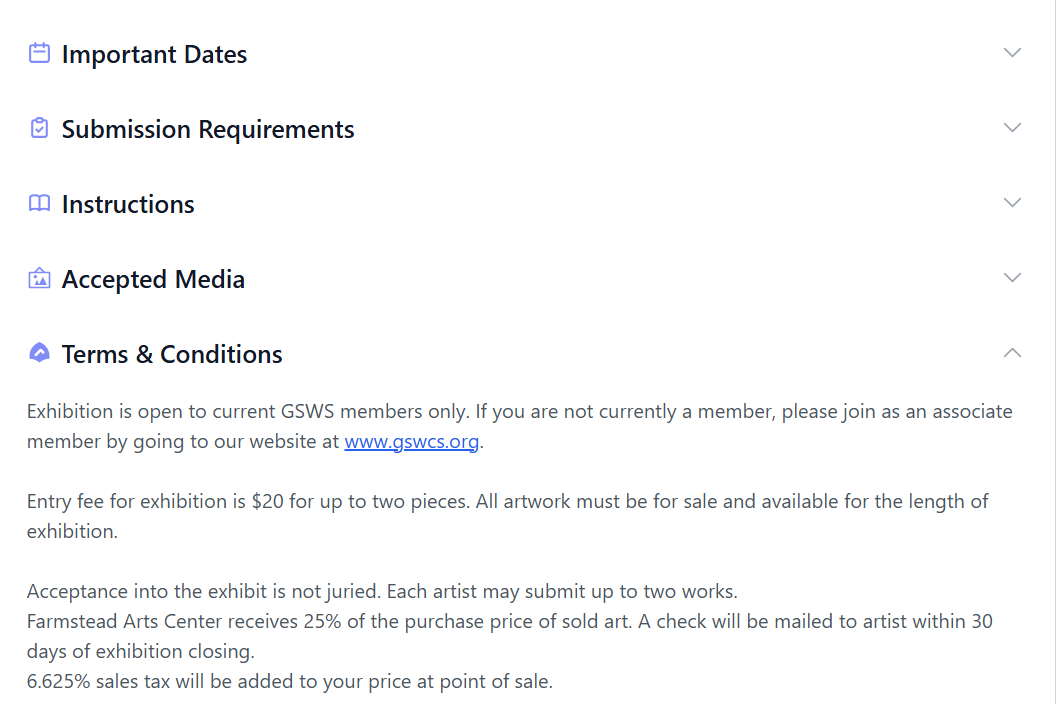
3. Prepare Your Artwork for Shipping
Shipping is one of the areas where costs can creep up quickly if you are not prepared. A few simple habits will save you money and make the whole process smoother for you and the gallery.
Create your own shipping label. You can create a free account with UPS or FedEx online, generate your label at home, and either schedule a pickup or drop the box off yourself. Asking the clerk at a shipping store to create the label at the counter costs roughly 30 percent more than doing it online. If you ship art regularly, a Stamps.com account costs around $15 a month and saves you 30 to 50 percent compared to going to a shipping store every time.
Pack your own work. Packing services at shipping stores can be expensive. One artist had her work packed at a shipping store and paid $375 to send it to the gallery. The gallery shipped it back for $70. Order your own boxes, cut them down to fit, or source them from UHaul, Uline, or Walmart.
Label everything. Write your name on the outside of the box and on every layer of wrapping inside. If anything gets separated, you want it traced back to you immediately.
Make unpacking easy. Pack your work so it is secure but also straightforward to unpack and repack. If the packing is complex, include a printed sheet inside the box explaining how it comes apart and goes back together.
Avoid packing peanuts if possible. They are messy, hard to dispose of, and can make unpacking more frustrating for the gallery.
Confirm the details before you ship. Ask the gallery for the exact shipping address, the dates and times they accept deliveries, any weight restrictions, and whether they require a return shipping label included with the shipment. When in doubt, a quick email to the gallery is always worth it.
4. Send Any Materials the Gallery Needs
Many galleries create binders or information sheets for their front desk, for staff, for press, and for visitors during the show. Before your work arrives, ask whether they need any of the following from you:
- A current artist bio (usually 100 to 200 words in third person)
- An artist resume or CV
- A headshot
- A high-resolution image of the work for press or promotional use
- An artist statement specific to the show
If they do, send everything as a clean, well-formatted PDF in one email. If you need a starting point for your bio or resume, we have put together guides on artist bio examples and artist resume examples that cover exactly what galleries are looking for.
5. Double-Check Presentation Requirements
Taking a few minutes to check these details before your work ships can save you a lot of back and forth with the gallery and ensure your work looks its best when it arrives.
Framing. Does the gallery have specifications? Some galleries only allow plexiglass, not glass. Some have requirements about frame color or style. You can always ask the gallery before you frame. And if you do frame your work, do not use a thrift store frame. It undermines the work. Better to show unframed with clean, finished edges than to frame it poorly.
Matting. White or off-white mats work in almost every context. Colored mats can work beautifully when they are a deliberate part of the work, but if you are unsure, keep them neutral.
Wiring. Make sure your work is wired correctly, with the wire positioned about one third of the way down from the top of the frame. The wire should not be loose, and it should not come above the top of the frame when hung. Avoid sawtooth hangers. Before you ship, hang the work on a wall yourself to confirm it sits flat.
Edges. If your work is not framed, make sure the edges are finished cleanly. Unfinished edges on an unframed canvas read as incomplete.
Special installation requirements. If your work has any specific hanging or installation needs, email the details to the gallery in advance and include a printed copy with the artwork when it ships.
6. Make the Most of the Exhibition
If you can attend the opening, it is worth going. It is one of the best opportunities to connect with the gallery staff, meet other artists in the show, and get your work in front of people who are already there to engage with art.
Invite people you know — friends, family, colleagues, anyone who might genuinely enjoy the show or who you would like to introduce to your work. Galleries appreciate artists who help bring an audience, and it gives you a chance to share the moment with people who care about your practice.
If the gallery is looking for volunteers during the opening or any programming around the show, offering to help is a great way to build a real relationship with the team beyond the show itself.
Bring business cards. Many galleries provide name badges for artists during openings, so keeping your cards in your lanyard means you are always ready when someone asks about your work.
7. Support the Exhibition and Promote Your Work
Being part of a juried show is one of the best marketing opportunities an artist can have, and it is one that many artists underuse.
The gallery has an audience. You have an audience. When both work together, the show gets more visibility and so does your work.
Start with the basics. Follow the gallery and the curator on social media if you do not already. Engage genuinely with their posts, share their promotional content, and tag them when you post about your participation. Tagging other artists in the exhibition helps too and builds real connections within the community.
But do not stop there. Think about how you can promote the show actively, not just repost what the gallery puts out. A few ideas that work well:
- Create collaborative content with the gallery on Instagram — behind the scenes of your work, installation day, or a preview of your piece in the space.
- Ask the gallery if they have a newsletter and whether they can feature you or your work in it. Many galleries are eager to include artist spotlights, especially if you make it easy for them by sending a short bio and a good image.
- Tell your friends, your family, your colleagues, your email list if you have one. The more people who walk through the door, the better the experience is for everyone, and galleries remember the artists who helped bring an audience.
- If you have press contacts or know anyone who covers the local art scene, let them know about the show. Even a small mention in a local blog or arts newsletter can make a difference.
Marketing your work in conjunction with the gallery is not just good etiquette. It is one of the most direct ways to grow your visibility as an artist and build a relationship that goes beyond a single show.
8. After the Show: Payment, Returns, and Follow-Up
Once the show closes, there are a few things worth following up on to make sure everything wraps up smoothly.
Retrieving your work. Before the show closes, confirm with the gallery how and when unsold work will be returned. Do they ship it back? Do you need to arrange pickup? Is there a deadline to collect it? Missing a collection deadline can result in storage fees or, in some cases, the gallery disposing of the work.
Getting paid. If your work is sold, confirm the payment timeline in writing before the show closes. Most galleries pay four to six weeks after the close of the show. If that date passes without payment, a polite follow-up email is completely reasonable. Keep a record of your communication throughout the process.
Documentation. If you have the chance to photograph your work installed in the show, it is worth doing. Installation shots in a real gallery space are valuable for your portfolio, your artist resume, and future applications. They carry a different weight than studio photos and give jurors and galleries a sense of how your work exists in an exhibition context.
9. If Something Feels Off After Acceptance
Most galleries handle exhibitions professionally, but if communication becomes unclear after acceptance, pay attention. A few warning signs are worth taking seriously:
Vague payment terms. If the gallery cannot clearly explain commission percentages, payment timelines, or what happens to unsold work, ask for clarification before moving forward.
Unexpected fees. Surprise charges for wall space, marketing, installation, or administrative costs should raise questions if they were not disclosed upfront.
Poor communication. Repeated delays, unclear shipping instructions, or unanswered emails can create problems later in the process.
Pressure to act immediately. If you are being pushed to pay or ship without clear documentation, slow down and ask questions.
If something feels unprofessional, trust that instinct and get clarity before committing further.
If you apply through EntryThingy, key details like entry fees, deadlines, eligibility requirements, and exhibition timelines are listed upfront, so you can evaluate the opportunity before committing.
Browse Verified Calls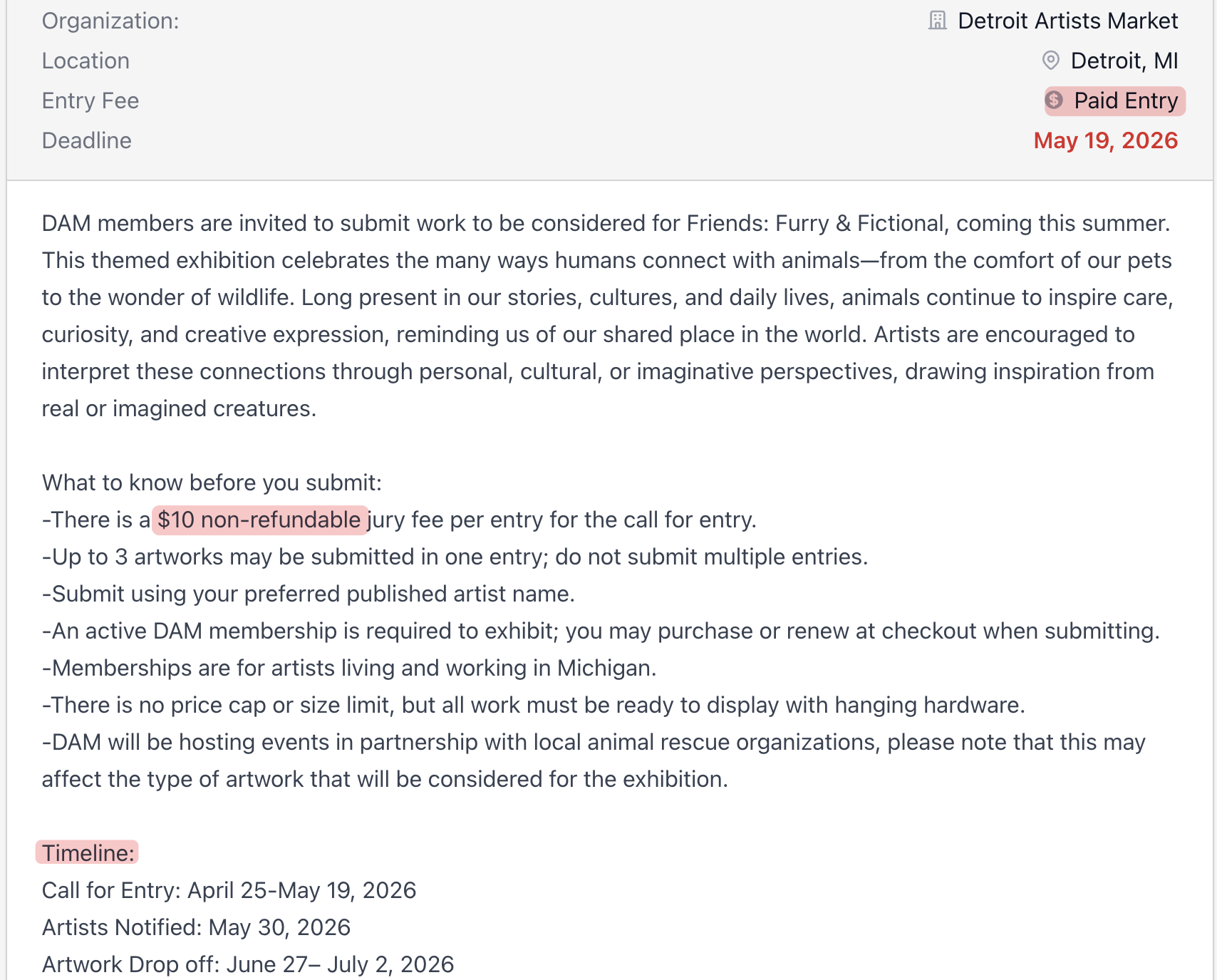
Why EntryThingy Makes the Process Easier
One of the reasons galleries use EntryThingy is that it requires them to be transparent upfront. Entry fees, deadlines, eligibility, and exhibition details are all listed before you apply. You are not committing time or money to something you cannot properly evaluate.
As an artist, you can browse verified calls, filter by medium and location, and apply directly through the platform, knowing that the basic information has been checked. It does not remove every risk, but it makes the process a lot more straightforward.

If you are still building out your submission materials, our guide on how to build an artist portfolio for calls covers what jurors actually look for, and our art call acceptance rates data gives you a realistic picture of what to expect when you apply.
FAQs About Getting Accepted Into an Art Show
What should I do first when I get an acceptance email?
Reply the same day. Confirm you received the acceptance, answer any questions in the email, and ask about anything that was not covered — especially commission terms, shipping details, and the timeline for results and payment.
Who typically pays for shipping to the gallery?
It varies by gallery and call. Some cover shipping costs, most do not. Always clarify before you ship. Also, ask whether you need to include a return shipping label for unsold work.
What commission percentage is standard?
Most galleries take between 40 and 50 percent of sales. Anything significantly higher is worth questioning. Get the commission percentage and payment timeline confirmed in writing before the show opens.
What if my work is damaged at the gallery?
Ask about insurance coverage before your work ships. A professional gallery will have coverage for work in its care. If they do not have a clear answer, ask them to put in writing what happens in the event of damage or loss.
Do I have to attend the opening?
No, but you should if you can. It builds your relationship with the gallery, gives you visibility with collectors and visitors, and signals that you take your participation seriously. Galleries remember the artists who show up.
What happens if the gallery does not pay me on time?
Follow up in writing and keep a record of your communication. If the gallery is consistently unresponsive about payment, that is a red flag worth noting for future applications. Check whether the call terms you agreed to included a specific payment date, as that gives you a clear basis for the conversation.
What is a vanity gallery?
A vanity gallery charges artists to show their work — either through high entry fees, wall space rental, or both — and typically does little to promote the show or the artists. The defining feature is that the gallery's revenue comes from artists rather than from sales or institutional support. If a gallery is asking you to pay for wall space on top of an entry fee, research their track record carefully before committing.