
Finding open art calls is easy. Finding legitimate, well-run calls you can actually trust is much harder.
As an artist, you're often asked to pay entry fees, upload high-resolution work, and commit time before knowing whether a call is credible, who's organizing it, or where the work will be shown.
That's why the platform hosting the call matters just as much as the opportunity itself.
In this guide, I break down 4 trusted art call platforms artists actively use in 2026, based on how they actually work when you're browsing calls and deciding where to apply.
TL;DR: Trusted Art Call Platforms (Tested)
- EntryThingy – Best all-around option for artists who want to quickly compare verified calls. Entry fees, locations, and deadlines are visible upfront, making it easier to browse and apply regularly. See EntryThingy call list.
- CaFÉ (CallForEntry.org) – Widely used for public art, municipal, and institutional projects. Calls are thorough and well-documented, but reviewing opportunities usually involves opening individual listings and spending more time reading details.
- ArtCall – Common for mid-sized juried exhibitions and competitions. Offers flexible submission formats and structured jury reviews, though comparing multiple calls often requires opening long, detail-heavy listings.
- ShowSubmit – Often used by artist societies and associations running recurring exhibitions. Call lists show basic details clearly, but filtering is limited, so narrowing down opportunities can take more manual browsing.
How I Tested These Platforms
To write this guide, I used each platform the same way I would when personally looking for open calls to apply to.
I spent time browsing live listings and opening individual calls to understand how information is presented and how easy it is to evaluate opportunities.
While reviewing each platform, I focused on:
- How easy it was to browse active calls
- Whether entry fees, deadlines, and locations were clearly shown
- If the organizer and exhibition details were visible before applying
- How clear the submission requirements and eligibility rules were
- How useful the search and filters were for narrowing results
- How long did it take to scan multiple calls and decide which ones to open
This guide is based on that hands-on process and reflects how the platforms work in real use.
4 Trusted Art Call Platforms for Artists
1. EntryThingy
EntryThingy is built around a simple principle: artists should know exactly what they're applying for before submitting work or paying a fee.
The platform focuses on verified calls, clear documentation, and real exhibition outcomes. Nearly 160,000+ artists use EntryThingy to submit work to 2,500+ galleries and arts organizations.
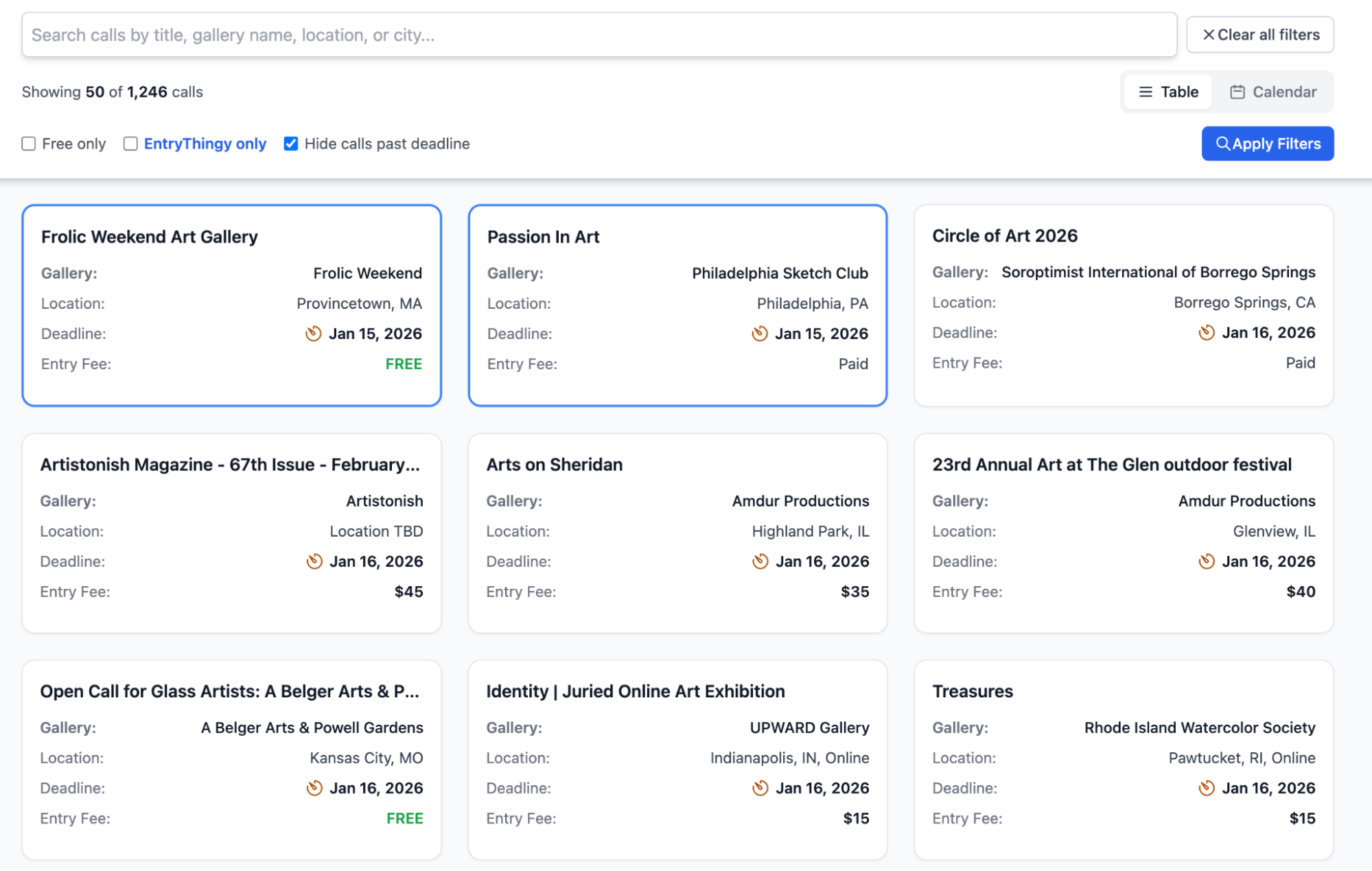
EntryThingy also maintains active, public artist communities on Instagram and Facebook - where our team shares live art calls, exhibition updates and more.
Why artists trust EntryThingy:
1. Calls are easy to filter and browse
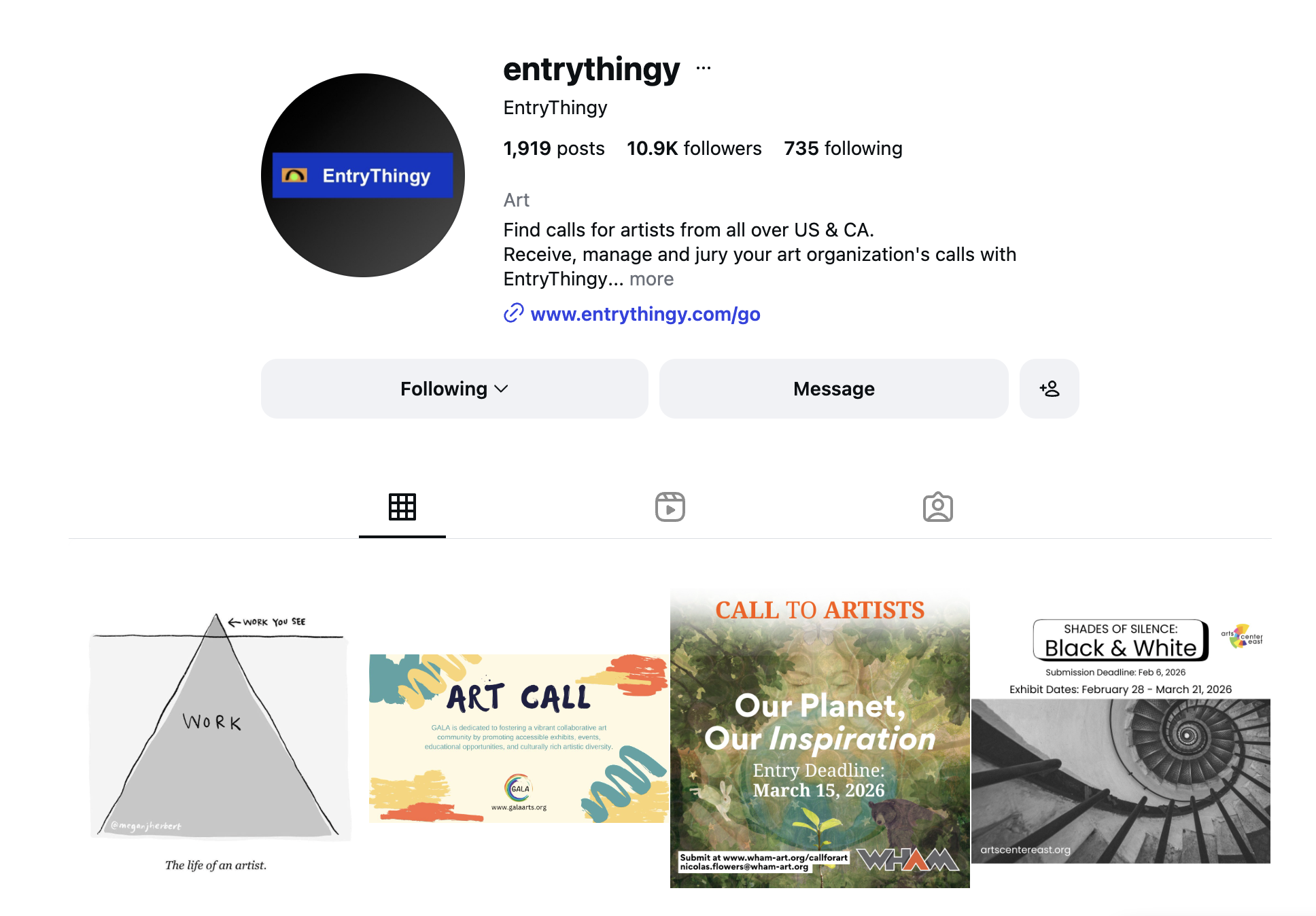
EntryThingy makes it easy to narrow down opportunities without opening dozens of listings. Artists can filter calls by state, city, medium, deadline month, and entry type (including free calls), or search directly by gallery name or location.
This means you can quickly focus on calls that match your practice and timeline, instead of scrolling through unrelated opportunities.
2. Calls come from verified galleries and venues
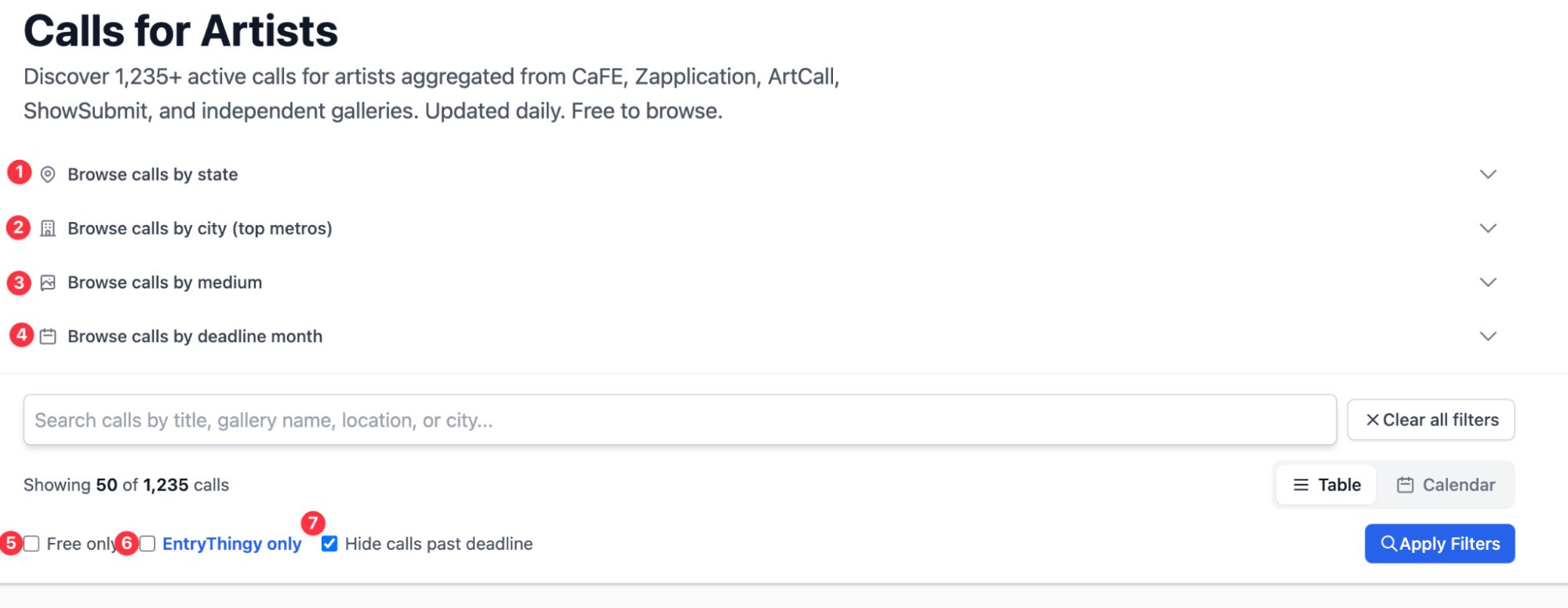
Every call is tied to a real gallery, art center, or organization, with visible venue and organizer information. This helps reduce the risk of vague or anonymous listings and makes it clear where the work will actually be exhibited.
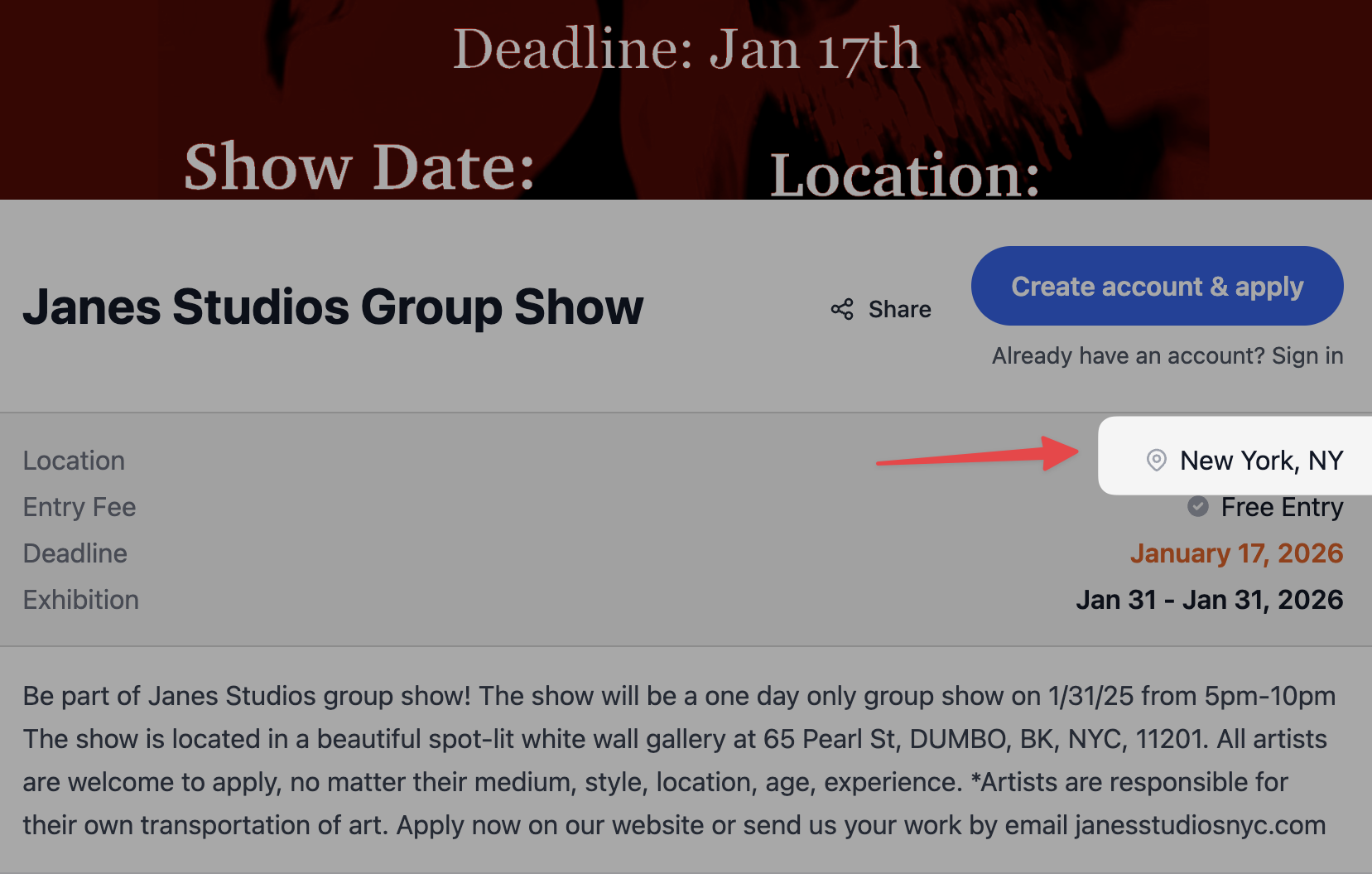
This is what a real call looks like on EntryThingy. You can see the exhibition location and whether the entry is free or paid.
3. Calls are actively reviewed and monitored
EntryThingy actively works to reduce scam and misleading art calls on the platform.
Calls that are reported as suspicious or inaccurate are reviewed and removed when they don't meet platform standards. The team also blocks known scam organizers and prevents repeat listings from the same sources.
In addition, users can flag calls directly, which helps surface issues quickly when something looks off or stops working.
This review process means you're not just browsing a list of submissions pulled from anywhere. You're seeing calls that are monitored, tied to real organizations, and updated or removed when problems are identified.
This guide on how to spot scam calls for art breaks down common red flags to watch for.
4. Entry fees are transparent
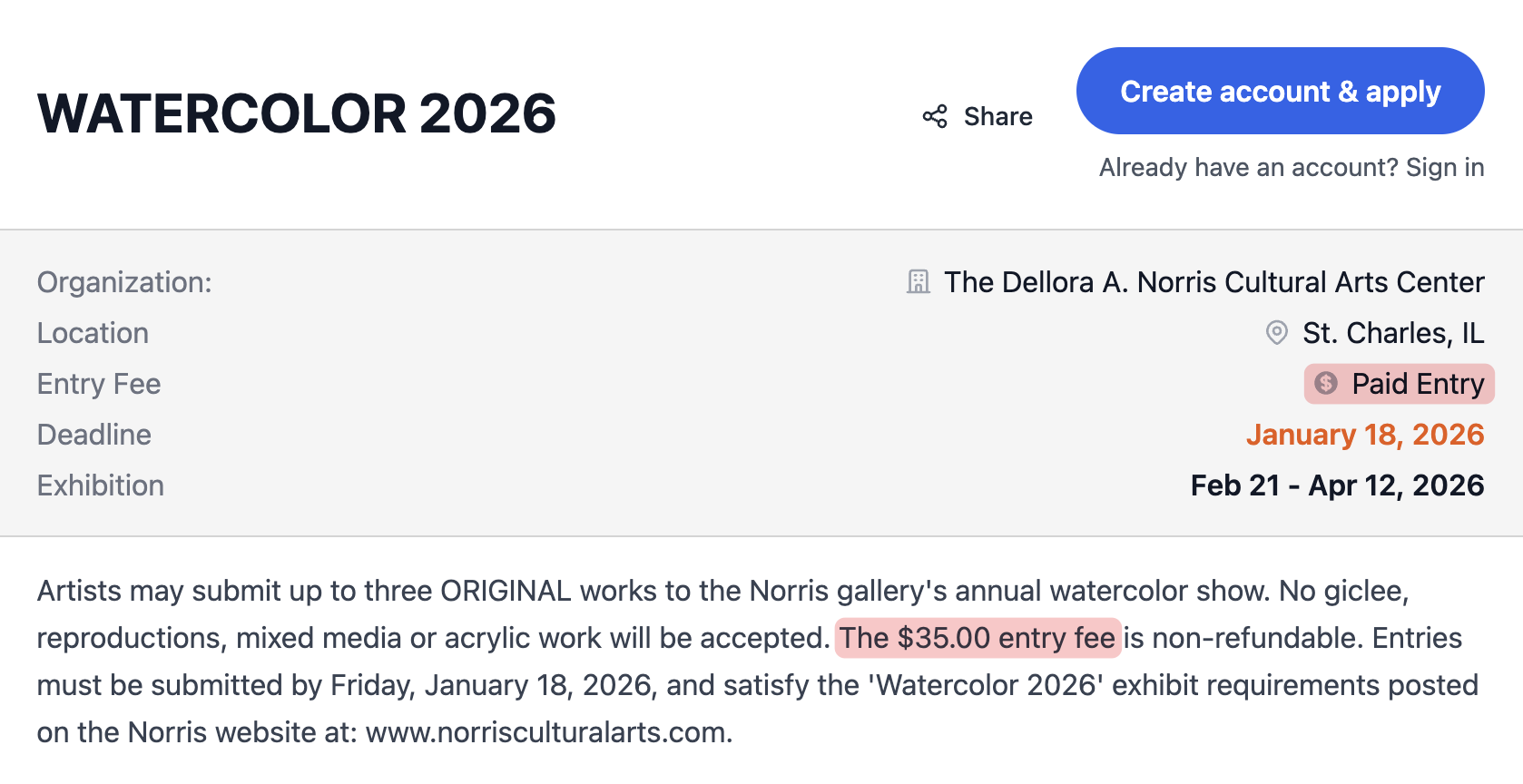
Entry fees are displayed directly on the call page. Artists can see the full cost before submitting, with no hidden platform charges or surprises later.
5. Call guidelines are easy to review
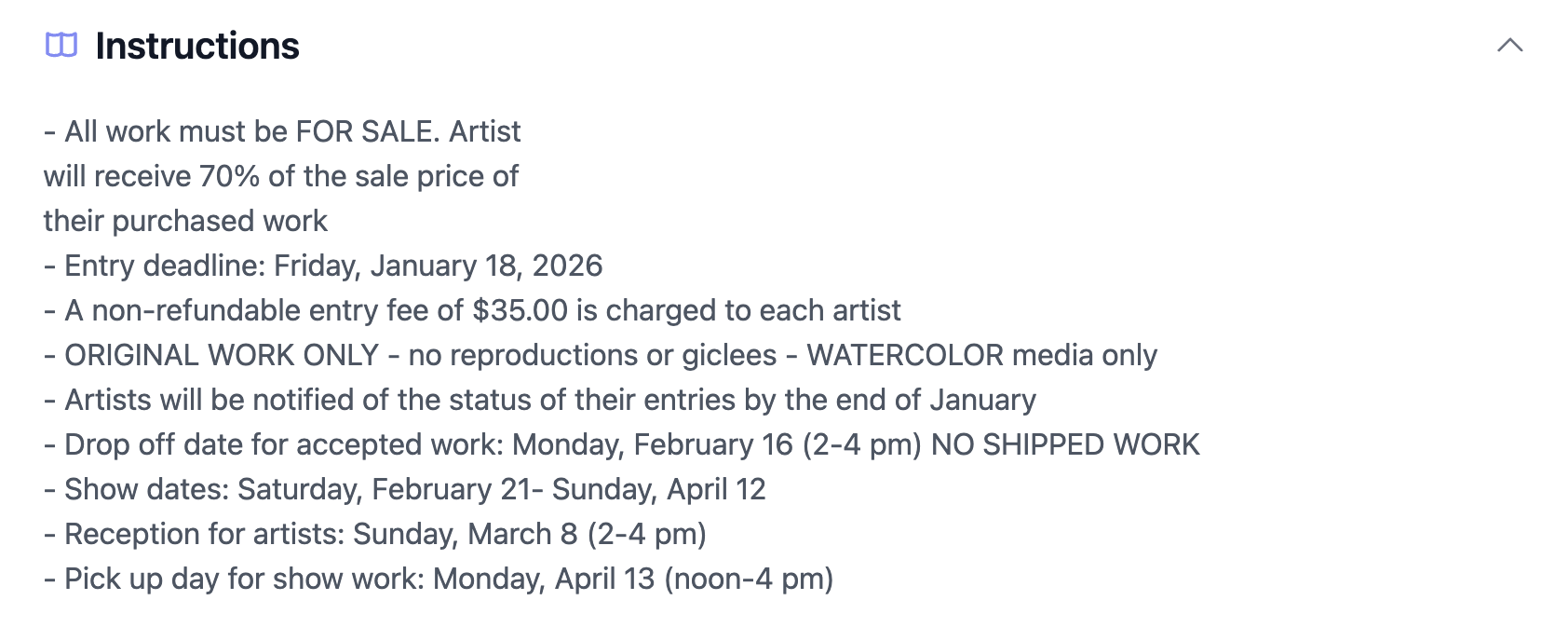
Each call clearly lists important details like deadlines, media requirements, sale terms, and exhibition dates. This helps artists quickly decide if a call is a good fit before spending time or money.
6. Curated environment for juried calls
EntryThingy actively works to reduce misleading or low-effort listings. For artists, this means less noise and more confidence that listed calls are legitimate and worth attention.
7. Trusted by 2,500+ galleries and organizations
That organizer-side adoption is a strong trust signal. It shows EntryThingy is relied on not just by artists, but by galleries running serious, well-structured calls.
My experience using EntryThingy
I may be biased here, but I've tested all the platforms in this guide the same way, by starting on the call list and seeing how easy it is to decide what's worth opening.
On EntryThingy, the moment I land on the calls page, I get a clear, big-picture view of what's available. I can scan titles, locations, and deadlines quickly and rule out calls that don't fit my practice right away.
What really speeds things up is the filtering. Being able to browse by state, city, medium, and deadline month (and combine that with search and options like free-only or hiding past deadlines) makes it much easier to narrow things down without clicking into dozens of listings. It's one of the most detailed and usable filter systems in this list.
Once I open a call, the information is well structured and complete: entry fee, dates, requirements, and exhibition details are all clearly laid out. That combination (strong filters first, clear details second) is what makes EntryThingy a platform you can trust when submitting work regularly.
💡 EntryThingy lists art calls from real organizers, with clear exhibition details and ongoing review to reduce misleading or scam listings.
Browse Open Calls2. CaFÉ (CallForEntry)
CaFÉ (CallForEntry.org) is a commonly used platform for public art, municipal projects, and institutional exhibitions.
Artists often come across CaFÉ when applying to opportunities run by government agencies, nonprofits, museums, or universities.
The platform is typically associated with calls that follow more formal application and review processes.
Why artists trust CaFÉ:
1. Commonly used by public and institutional organizations
Many public art agencies and nonprofit institutions publish calls through CaFÉ. This makes it a reliable place for artists to find publicly funded and institution-run opportunities.
2. Structured call information and requirements
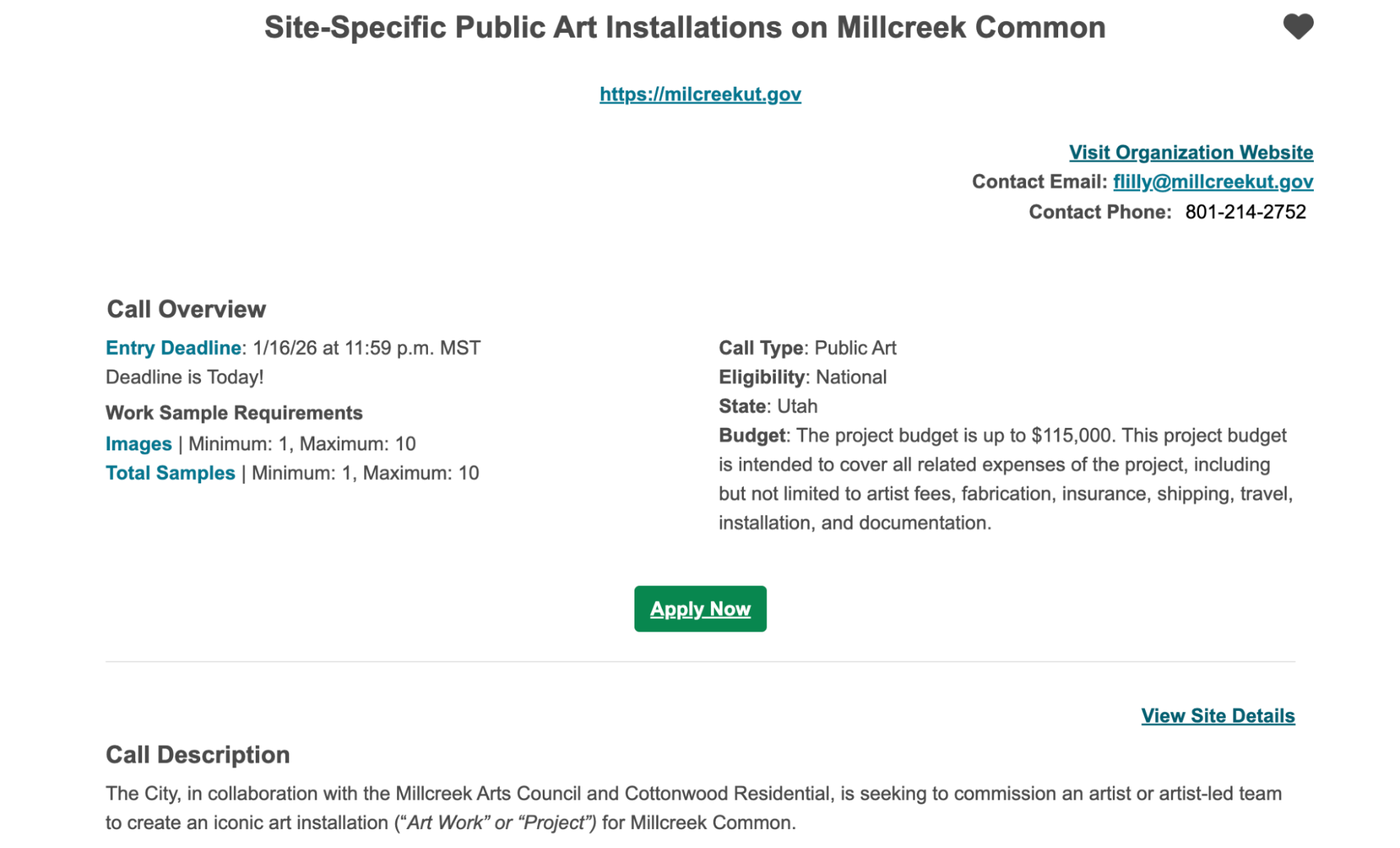
Listings usually include eligibility rules, required materials, deadlines, and basic evaluation criteria. Artists can see what's required before starting an application.
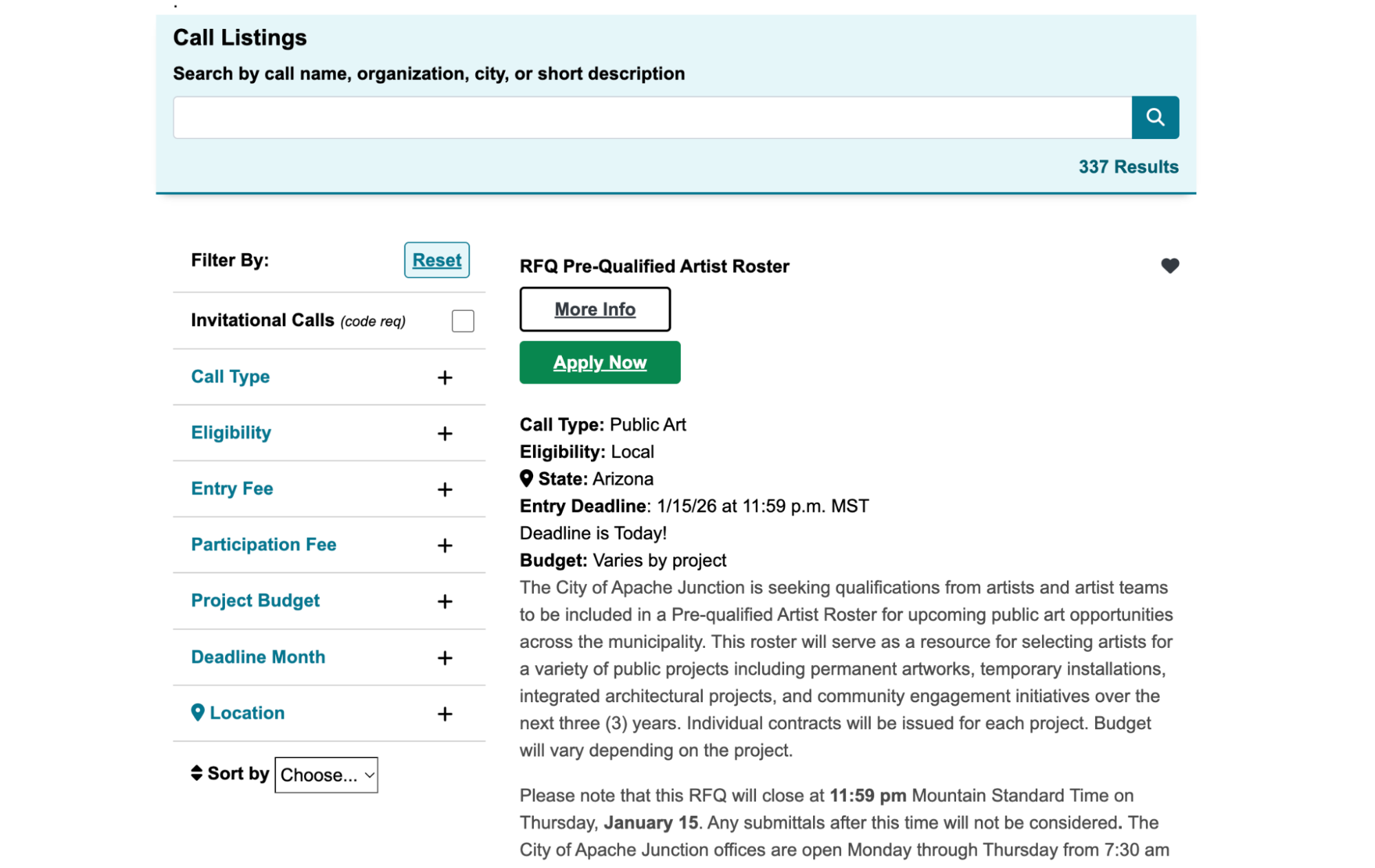
Each call page shows detailed project information, including location, eligibility, budget, and submission requirements, which is especially important for public art and institutional work.
3. Project and exhibition details are listed upfront
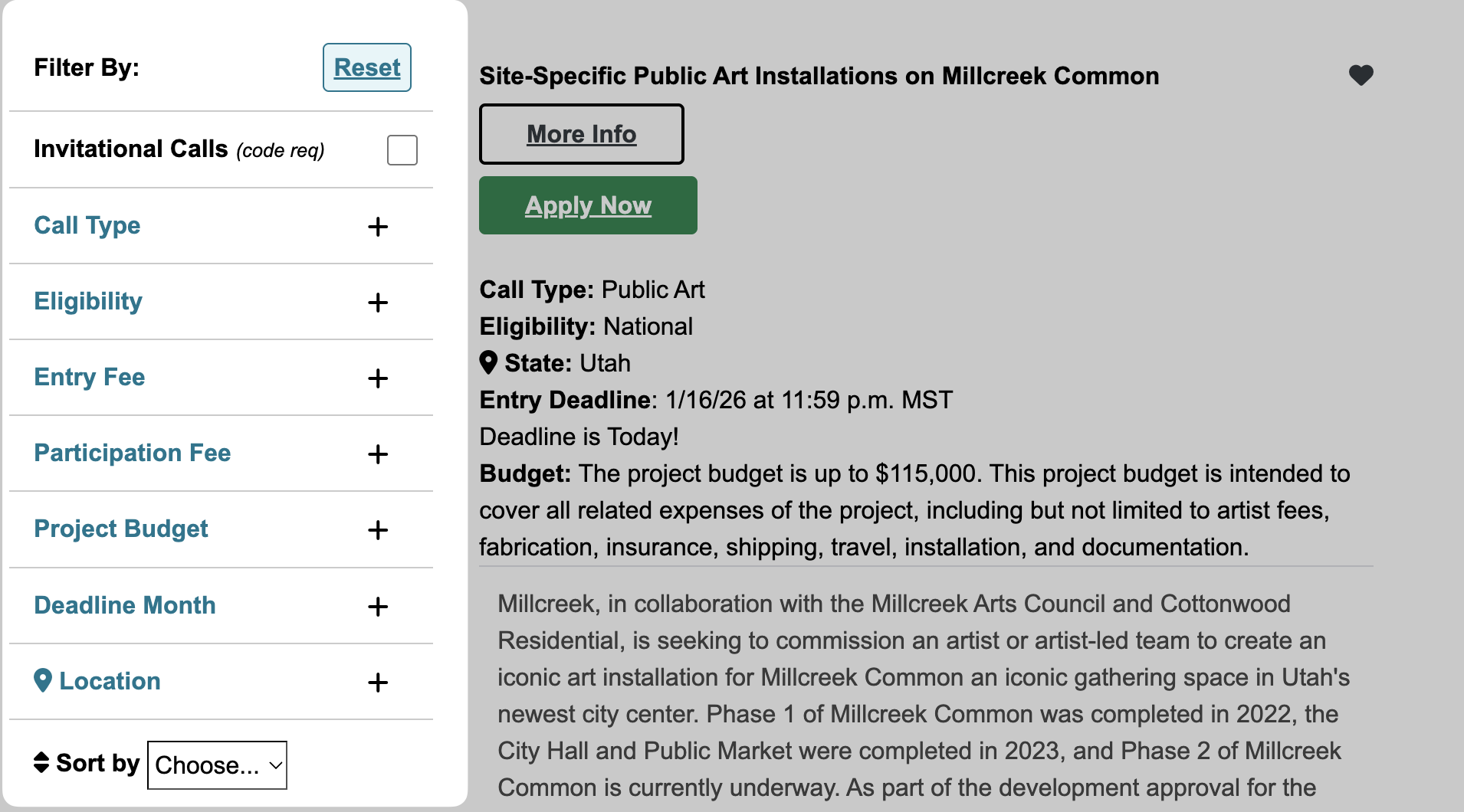
Calls often outline project scope, locations, timelines, and expectations, helping artists assess whether an opportunity is a fit before applying.
However, finding the right calls can take more time. Browsing often involves opening individual listings to review details, rather than narrowing results quickly from the list view.
4. Supports formal jury and review processes
CaFÉ includes tools for structured review and selection. Overall, submissions are evaluated through an organized process rather than informally.
5. Familiar workflow for repeat applicants
Artists who apply to public or institutional calls regularly tend to reuse CaFÉ, which reduces friction over time.
My experience using CaFÉ
From my experience using CaFÉ, the calls are well-documented and reliable, especially for public and institutional projects.
That said, finding the right opportunities often means opening individual listings and reading through full descriptions rather than scanning results quickly. It's thorough, but browsing can feel time-intensive.
If you want to compare how different submission platforms handle features, pricing, and listings can also explore these Call for Entry Café alternatives to see how other tools stack up.
3. ArtCall
ArtCall is a call-for-entry platform commonly used by galleries, exhibition spaces, festivals and art competitions.
Artists often encounter ArtCall when applying to juried shows that sit between small local calls and larger institutional programs.
The platform is generally used for exhibitions where organizers want flexibility in how submissions are collected and reviewed.
Why artists trust ArtCall:
1. Exhibition and venue details are usually provided
Most listings include the exhibition name, venue, location, dates, and a detailed description of the show.
Artists can usually confirm where the work will be shown and who is organizing the exhibition before applying.
This makes ArtCall reliable from a legitimacy standpoint, even if the layout feels dense.
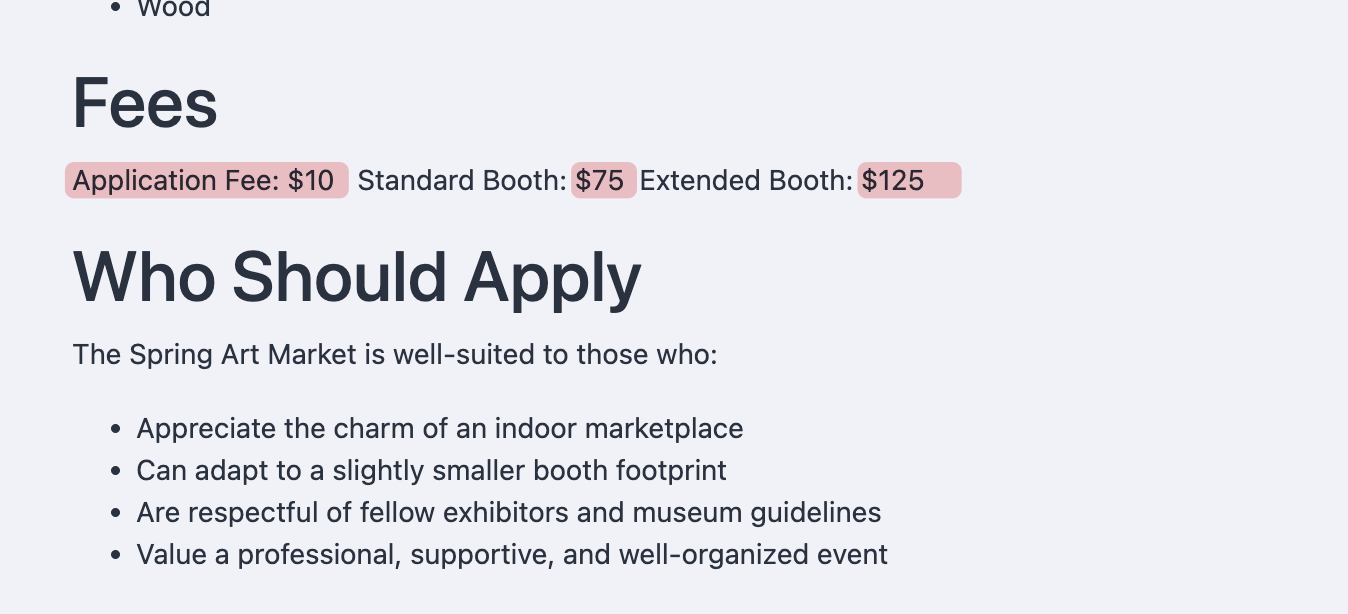
2. Entry fees are visible before submission
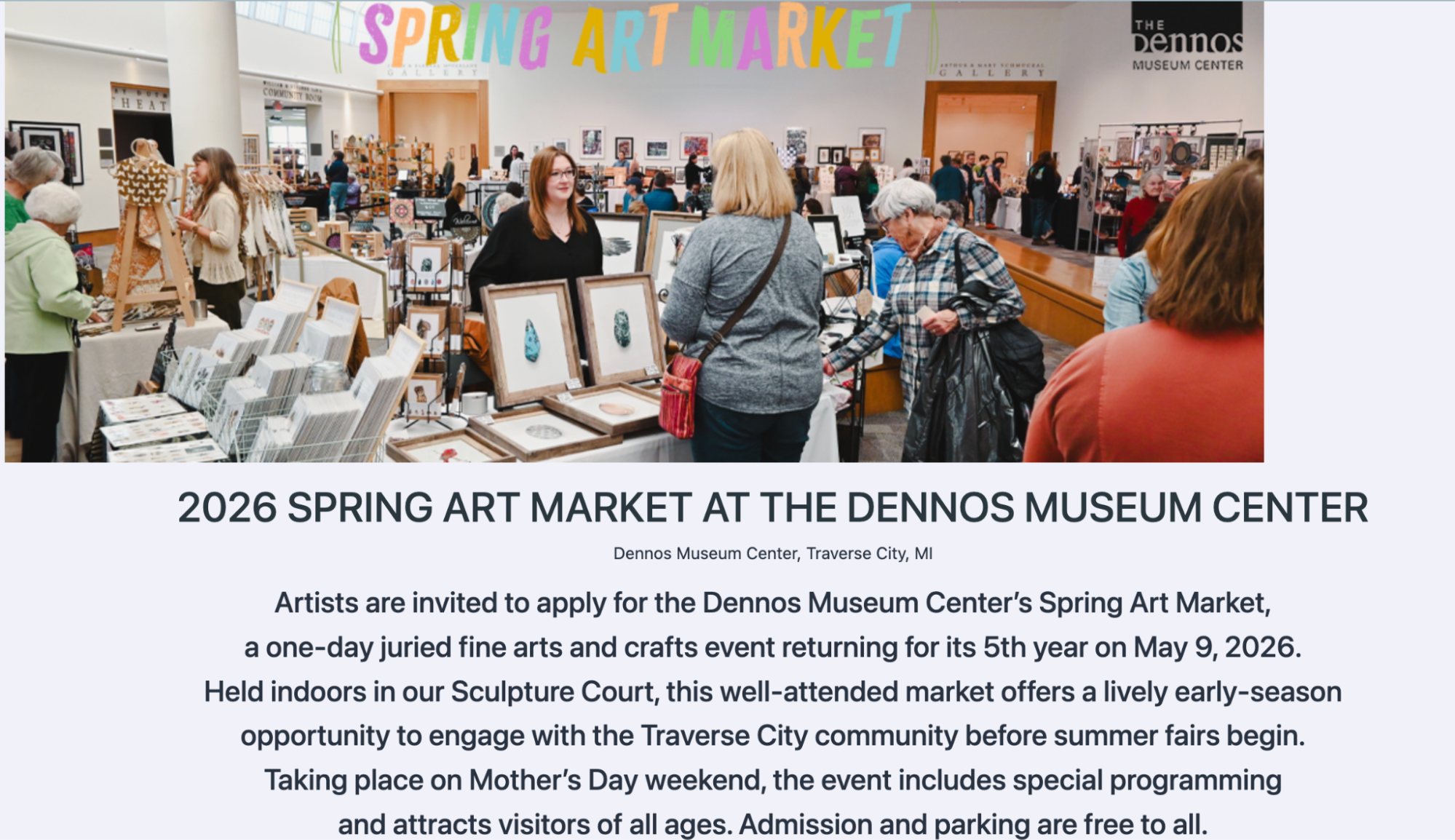
Fees are set by the organizer and shown on the call page. Artists can review the cost before deciding to apply.
3. Supports structured jury reviews
ArtCall allows multiple jurors, anonymous reviews, and voting or scoring rounds. This shows a defined review process rather than an informal selection.
4. Flexible submission formats
Calls often support multiple images and different media types, depending on the exhibition. This makes ArtCall suitable for mixed media and non-traditional work.
5. Browsing and filtering
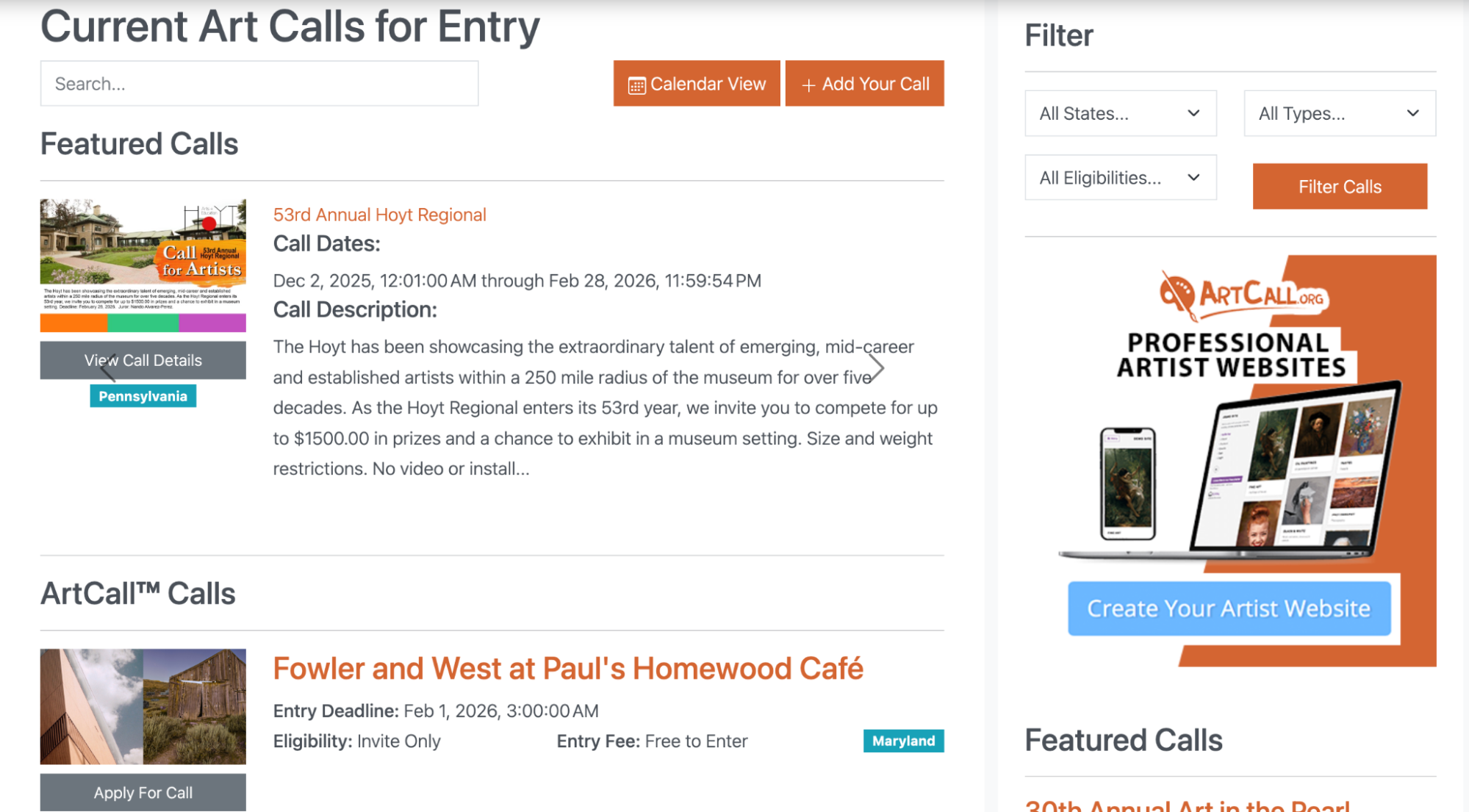
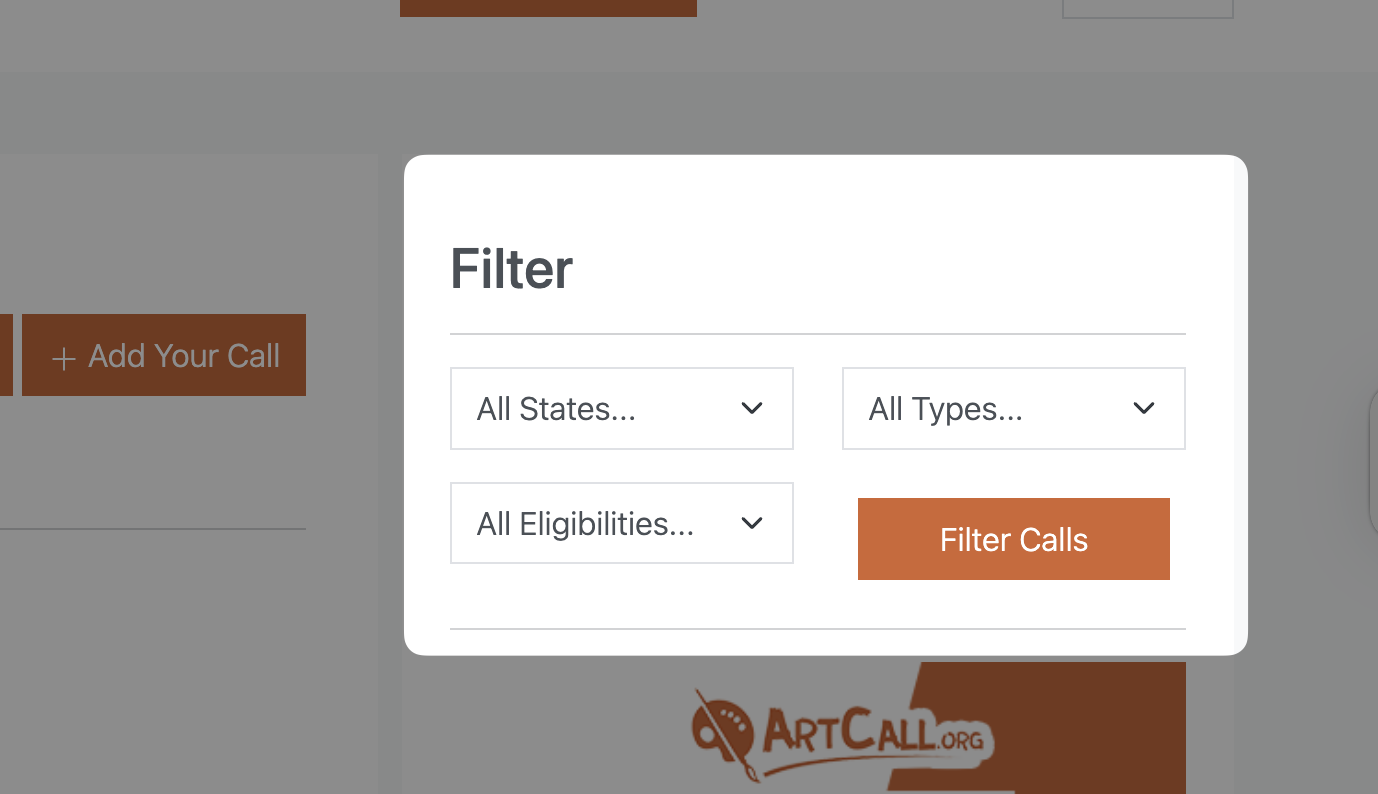
ArtCall includes basic filters (such as state and eligibility), but artists often need to open individual listings to fully understand whether a call is a good fit.
Unlike EntryThingy, there isn't a clean overview showing entry fee, location, and deadline at a glance across all calls.
This means browsing can feel slower, especially when comparing multiple opportunities.
My experience using ArtCall
When I tested ArtCall's call list, I found that all the important information is there, but it takes more time to review and compare opportunities.
Most details are spread across longer pages, so I often needed to open each call and scroll to understand fees, eligibility, and logistics. It works well for careful, one-by-one review, but browsing many calls at once feels slower.
4. ShowSubmit
ShowSubmit is a submission platform commonly used by artist societies, associations, and member-based organizations.
Artists often encounter ShowSubmit when applying to annual society shows, juried member exhibitions, or traveling exhibitions.
It's typically associated with more traditional exhibition formats and organizations that run recurring shows each year.
Why artists trust ShowSubmit
1. Commonly used by established artist societies
Many well-known art societies and associations use ShowSubmit to manage submissions. For artists, seeing familiar organization names helps signal that a call is legitimate.
2. Exhibition details and timelines are listed upfront
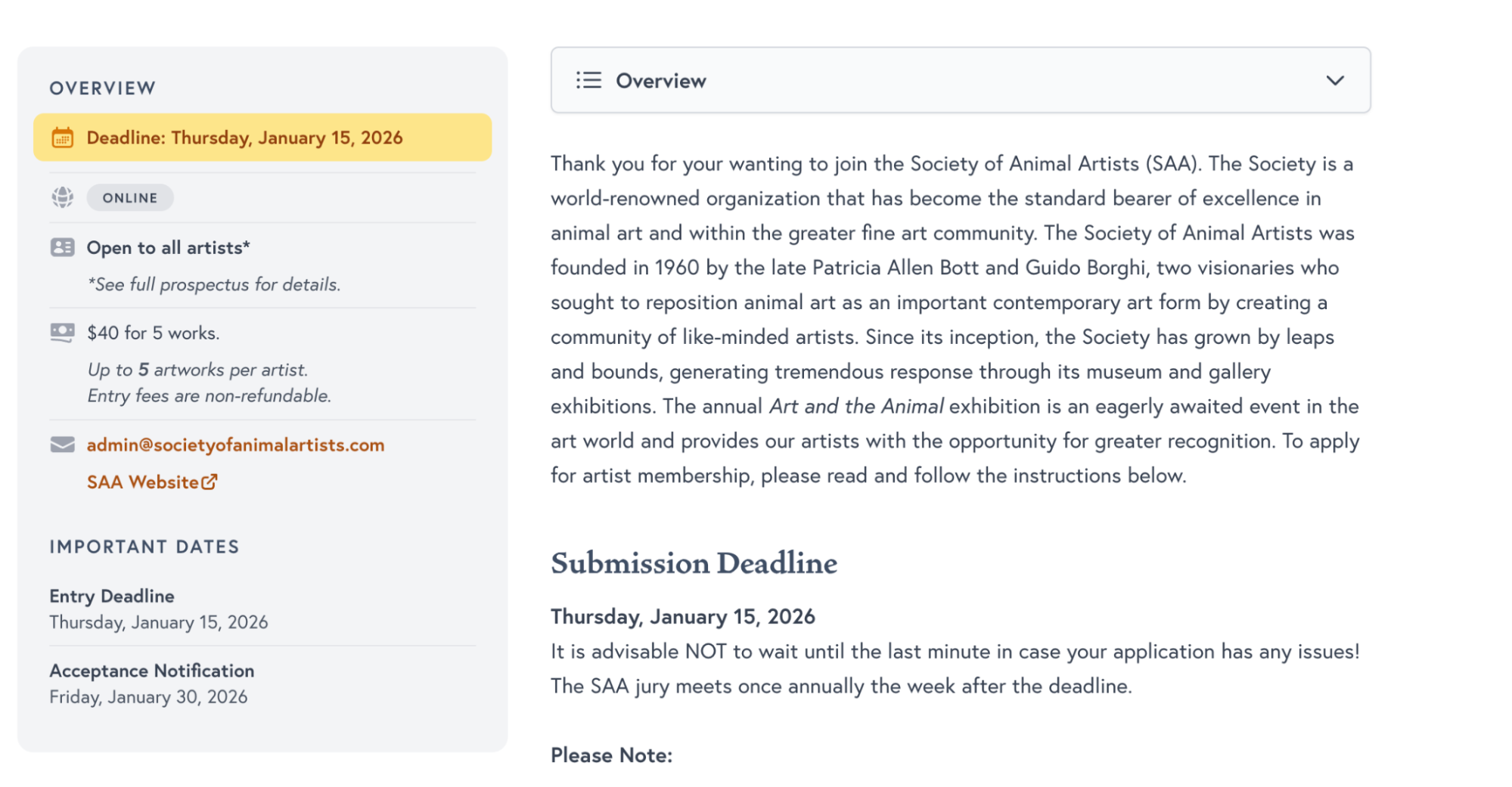
Most calls clearly show submission deadlines, exhibition dates, venues, and locations. This helps artists understand where and when work will be shown before applying.
3. Straightforward submission process
Submissions usually involve uploading images and completing required fields without complex profiles or extra steps. Calls can often be reviewed without logging in (just like any platform in the list).
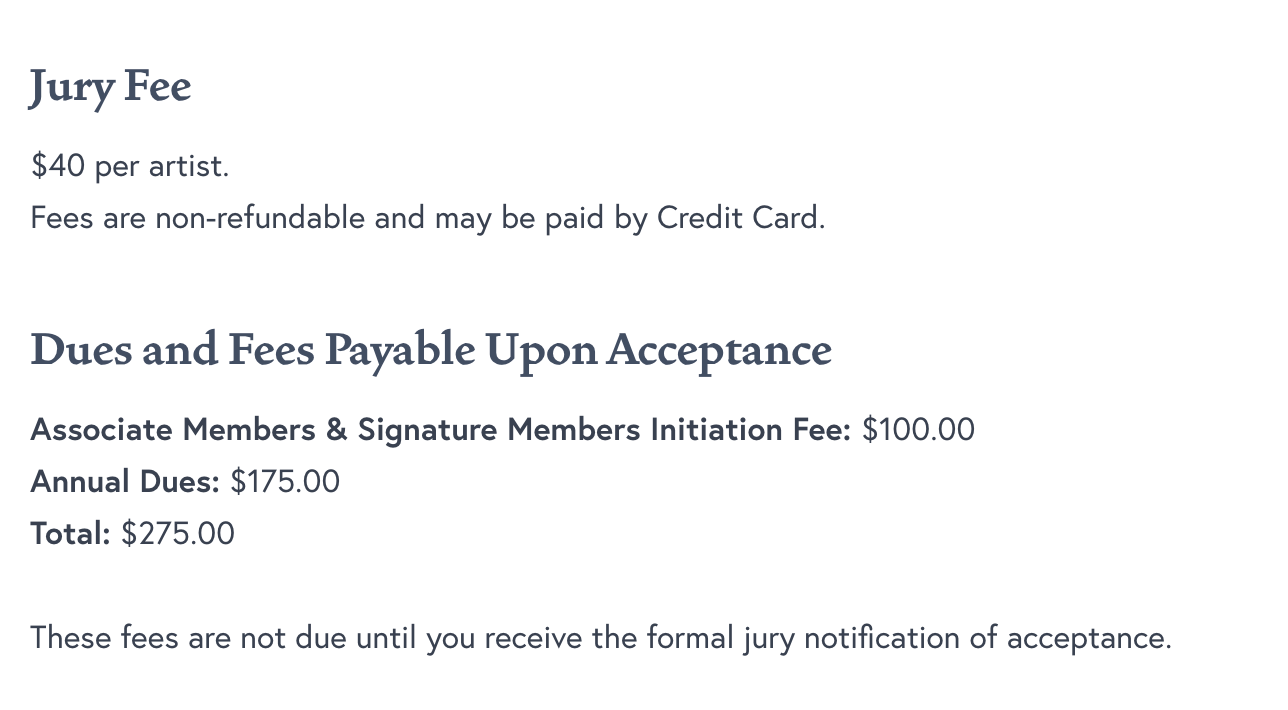
4. Entry fees are clearly stated
Fees are set by the hosting organization and shown on the call page. Artists can see the cost before submitting, with no added platform charges.
5. Online exhibition galleries for accepted work
Accepted works are often displayed in online galleries hosted by ShowSubmit. These galleries allow artists to share accepted pieces and view awarded or exhibited work.
My experience using ShowSubmit:
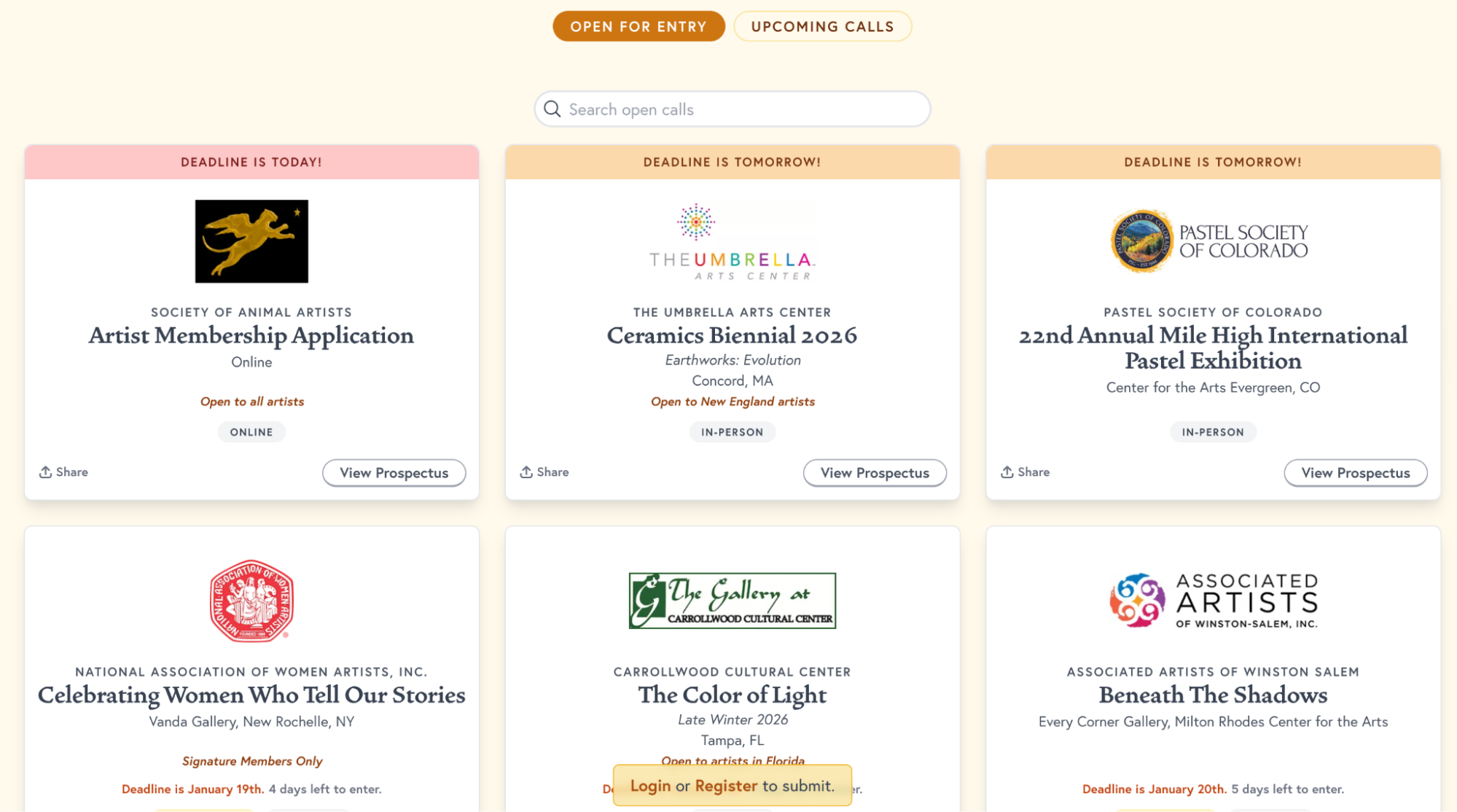
When I used ShowSubmit, I found it easy to scan through a large number of calls because many listings show deadlines and basic details upfront.
That said, narrowing things down took more time. There's no filtering system on the main call list, so I often had to rely on search or open individual listings to compare opportunities.
All the important information is there, but reviewing multiple calls requires more scrolling and manual checking.
Browse Transparent Art Calls More Easily With EntryThingy
EntryThingy brings verified art calls into one place, so you can browse current opportunities: who's organizing a show, where work will be exhibited, or what fees apply.
On EntryThingy, you can:
- Browse calls with entry fees, locations, and deadlines shown upfront
- Filter opportunities by medium, location, deadline, and exhibition type
- Review call guidelines before applying, without jumping between multiple sites
Instead of sorting through scattered listings or unclear calls, you can focus on opportunities that match your practice and decide where to apply with confidence.
If you're new to submissions or want a refresher, this guide on how to apply to art calls walks through the process step by step.
View current calls on EntryThingy and explore available opportunities.
FAQs About Art Call Platforms
How do I know if an art call is legitimate?
Legitimate art calls clearly show who is organizing the exhibition, where the work will be shown, key dates, and submission requirements. Calls that hide organizer information, locations, or exhibition details are often risky. Verified platforms typically require this information before publishing a call.
Are scam art calls common?
Yes, especially on social media and unmoderated listing sites. Scam calls often reuse vague language, ask for high fees without clear outcomes, or don't list a real venue. Using platforms that review, monitor, and remove misleading calls can significantly reduce risk.
How does EntryThingy handle scam or misleading calls?
EntryThingy actively reviews calls and removes listings that don't meet platform standards. Suspicious calls can be flagged by users, reviewed by the team, and delisted if they're inaccurate or misleading. Known scam organizers are blocked from reposting.
Do art call platforms charge extra fees?
Most platforms show entry fees set by the organizer. Some platforms add service fees, while others (like EntryThingy) display the full cost upfront without hidden platform charges. Always check the call page before submitting.
Is it safe to submit work through online art call platforms?
Yes, when using established platforms that require organizer verification and show full exhibition details. You should always review the venue, deadlines, and guidelines before submitting work or paying a fee.