
Getting rejected from an art call is frustrating.
Especially when you've spent hours preparing images, writing your statement, paying the entry fee, and waiting weeks for a response.
The natural reaction is to assume the work wasn't good enough. But that's often not the whole story.
Juried shows reject artists for many reasons, some of which have very little to do with artistic quality.
This guide covers the most common reasons artists get rejected and what you can do differently before your next submission.
Key Takeaways
Rejection is more normal than most artists realize. In piece-juried shows (where each artwork is evaluated individually), only 35.6% of individual works are accepted. Even in entry-juried shows (where your full submission is accepted or declined as one package), roughly 1 in 3 applications is declined.
Juror fit is the most overlooked rejection cause. Most artists never research who is judging before they apply. The juror's background and taste directly affect what gets selected — acceptance rates swing nearly 20 points between the highest and lowest performing mediums.
Portfolio cohesion matters more than individual quality. Submitting work that's already sold, missing piece information, or three pieces in three different styles are the most common mistakes galleries actually complain about.
Image quality is the most fixable problem. 47% of gallery directors rejected submissions due to poor image quality, even when the artwork itself appeared promising. Poor lighting, distracting backgrounds, and wrong file formats are easy to correct.
Artists who apply strategically get accepted more. Data from EntryThingy shows artists who have submitted to 4 to 10 shows are accepted at 78.5%, compared to 58.3% for first-timers. The gap is not talent. It is preparation and show selection.
Some calls are not worth applying to. Missing juror information, vague prizes, and unclear fees are red flags before you spend time or money on an application.
The First Thing To Understand: Rejection Is Normal
Before you change anything about your work or process, it helps to put rejection in context.
We pulled jurying data from hundreds of completed shows on EntryThingy to understand how selective the process actually is. Here is what that looks like by jurying model.
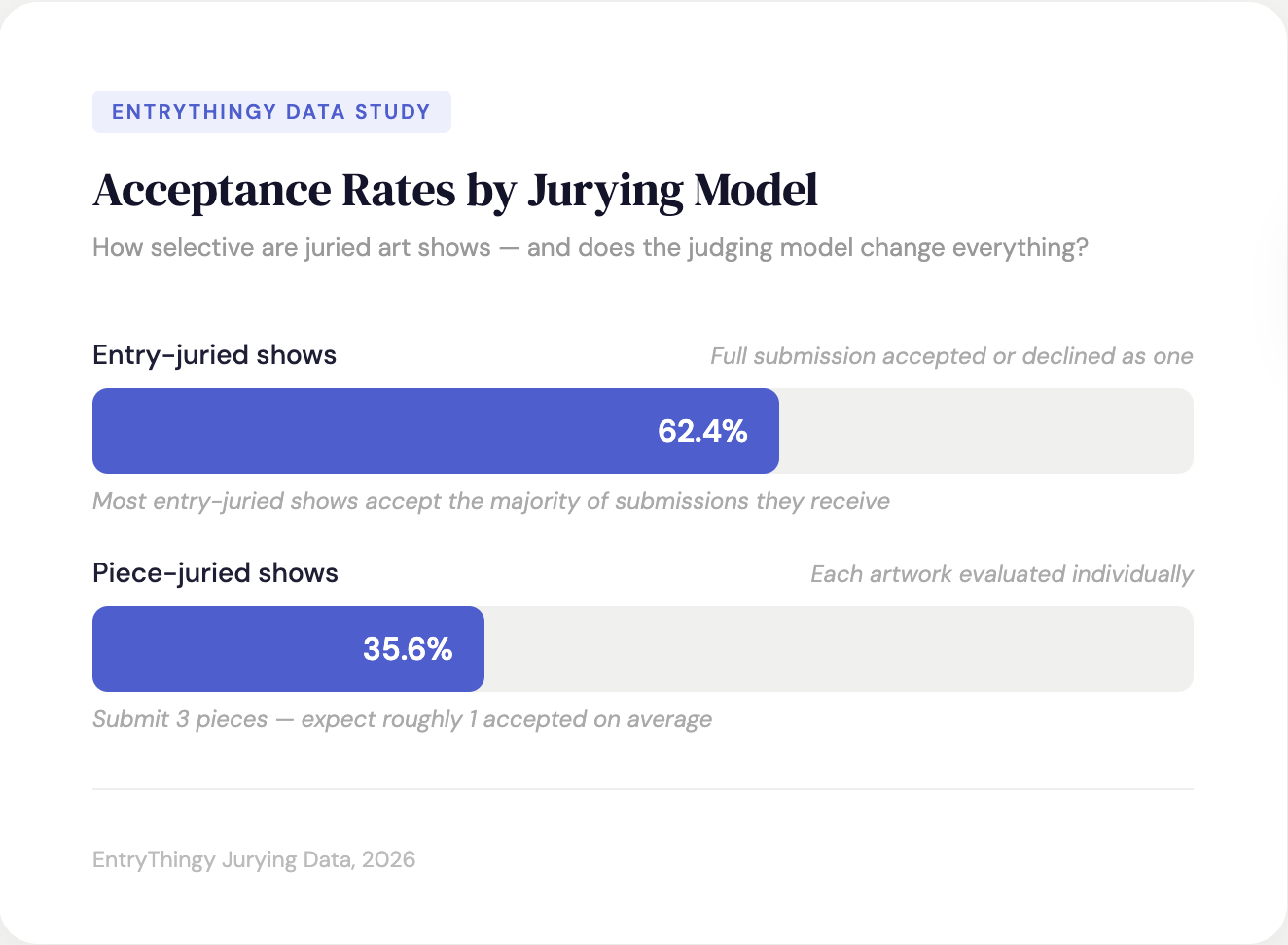
Our data shows that in piece-juried shows, 35.6% of individual works are accepted. In entry-juried shows, that number climbs to 62.4%. But even in the more accessible entry-juried model, roughly one in three applications is declined.
That means in a competitive show, excellent work gets rejected every single round. Not because it isn't good. Because there are more strong applications than available spots.
If you want the full picture of how selective art calls really are, our breakdown of art call acceptance rates covers the numbers by medium, jurying model, and submission timing.
The important takeaway: rejection isn't a verdict on your talent. It's a normal part of the process. What matters is understanding which rejections are fixable.
Reason #1: Your Work Wasn't a Fit for the Juror
This is one of the most overlooked factors in call for art rejections, and one of the most preventable.
Most artists don't research the juror before they apply. They see an opportunity, check the deadline, and submit. But the juror is the single person deciding whether your work gets accepted, and they bring their own background, taste, and interests to that decision.
A photographer whose practice centers on documentary work will evaluate submissions differently than an abstract painter who has spent 30 years in color theory. Neither approach is wrong. But your work will land differently depending on who's reading it.
Before you apply, look the juror up:
- What kind of work do they make?
- What exhibitions have they curated?
- What artists do they tend to champion?
- Does your work have any genuine overlap with what they're drawn to?
Our acceptance rate data shows this plays out across mediums too. Colored pencil leads piece-juried shows at 45.6%, while encaustic sits at the bottom at 26.6%. Works on paper (pastel, printmaking, gouache, watercolor) consistently outperform the most submitted mediums like acrylic and oil, which fall in the bottom half.
That gap is partly about volume, but it's also about how different mediums read to a juror reviewing images on a screen. A crisp watercolor reads immediately. A layered encaustic surface often doesn't.
The juror's own practice shapes that perception further. For the full medium breakdown, see our art call acceptance rates study.
On EntryThingy, every call listing shows you the juror's name, background, and bio before you apply, so you can make that research decision in one place rather than hunting across the web.
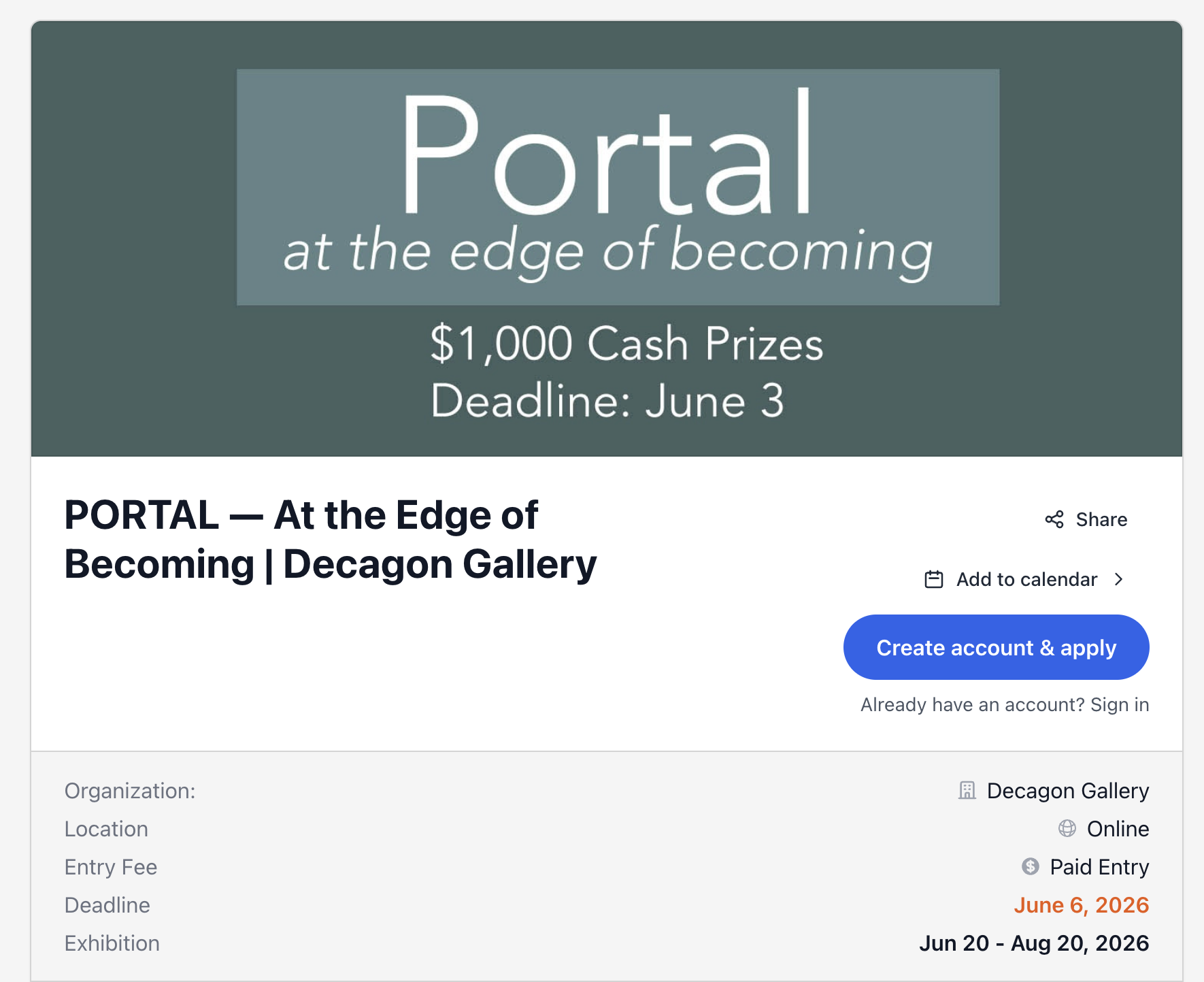
The call page tells you who is judging, where the show is located, the deadline, the fee, and eligibility requirements all in one place. EntryThingy surfaces that information upfront so you can evaluate the opportunity before committing time to an application.
Reason #2: The Gallery Wasn't a Fit for Your Work
Many artists submit everywhere, but strong artists submit selectively.
A gallery's history tells you a lot about what they're actually looking for, even when the call says "all mediums welcome." If their last five exhibitions skewed toward large-scale installation work and you're submitting small figurative paintings, you're working against their aesthetic gravity.
Before applying, spend 10 minutes reviewing:
- Past exhibitions (website or Instagram)
- Artists they've shown before
- How they describe their programming
- Whether your work would feel at home in that space
This matters for your career beyond the acceptance itself. Being shown in a gallery that's genuinely aligned with your practice is worth far more than a credit at a venue that doesn't connect with what you do.
Reason #3: Your Portfolio Lacked Cohesion
This is one of the most common reasons strong artists get rejected, and it's rarely about quality.
A portfolio that feels disconnected makes it hard for a juror to understand your practice. If your submission shows three pieces in three different styles, three different mediums, and three different subject areas, the juror has no clear picture of who you are as an artist. They're not evaluating your best work. They're trying to figure out what your work actually is.
Common cohesion problems:
- Too many styles in one submission
- Mixing mediums without a clear connecting thread
- No visible point of view across the pieces
- Selecting pieces based on how much you like each one individually, rather than how well they work together
You don't need to be rigid. But the juror should be able to look at your submission and immediately understand what you're about.
From what we hear from galleries, these are the most common portfolio mistakes artists make:
- Submitting work that has already been sold. If it's not available, it shouldn't be in the application.
- Missing piece information. No price, no description, or incomplete details make the application feel unfinished.
- Submitting work that doesn't match the show's theme. Entering a watercolor show with oil paintings signals you didn't read the call carefully.
- Leaving out a resume or artist statement. Both are considered part of a complete portfolio submission.
- Too many clashing styles with no consistent thread. When everything feels unique and different, it can read as inconsistent rather than versatile.
If you're working on strengthening your submission materials, our guides on how to build an artist portfolio for calls and artist portfolio examples for juried shows are good places to start.
Reason #4: Your Images Made the Work Look Worse
In a juried show reviewed digitally, the image is the work. A juror looking at your submission on a screen has no access to scale, texture, or the physical presence of the piece. What they have is a JPEG.
According to a 2024 survey of gallery directors, 47% reported rejecting submissions due to poor image quality, even when the artwork itself appeared promising. It is one of the most common rejection causes, and also the most fixable.
Watch for:
- Uneven or harsh lighting that flattens the work
- Distracting backgrounds (visible easels, walls with outlets, patterned surfaces)
- Cropping that cuts off edges or leaves too much dead space
- Low resolution that looks soft or blurry at full screen
- Color casts that shift the actual tones of the piece
On the technical side, most calls specify JPEG format, with a minimum of around 1920px on the longest side and a file size under 5MB. If you're shooting on a phone, make sure you're exporting correctly. Phones default to HEIC, which most submission platforms don't accept. And never upscale a small image to meet dimension requirements — it adds pixels but not detail, and it shows.
For lighting, two daylight-balanced LED lights at 45-degree angles to the artwork is the standard setup for eliminating glare and getting even coverage. If you're working with framed work behind glass, remove the glass before photographing if at all possible. Glass creates reflections that no amount of post-processing fully fixes.
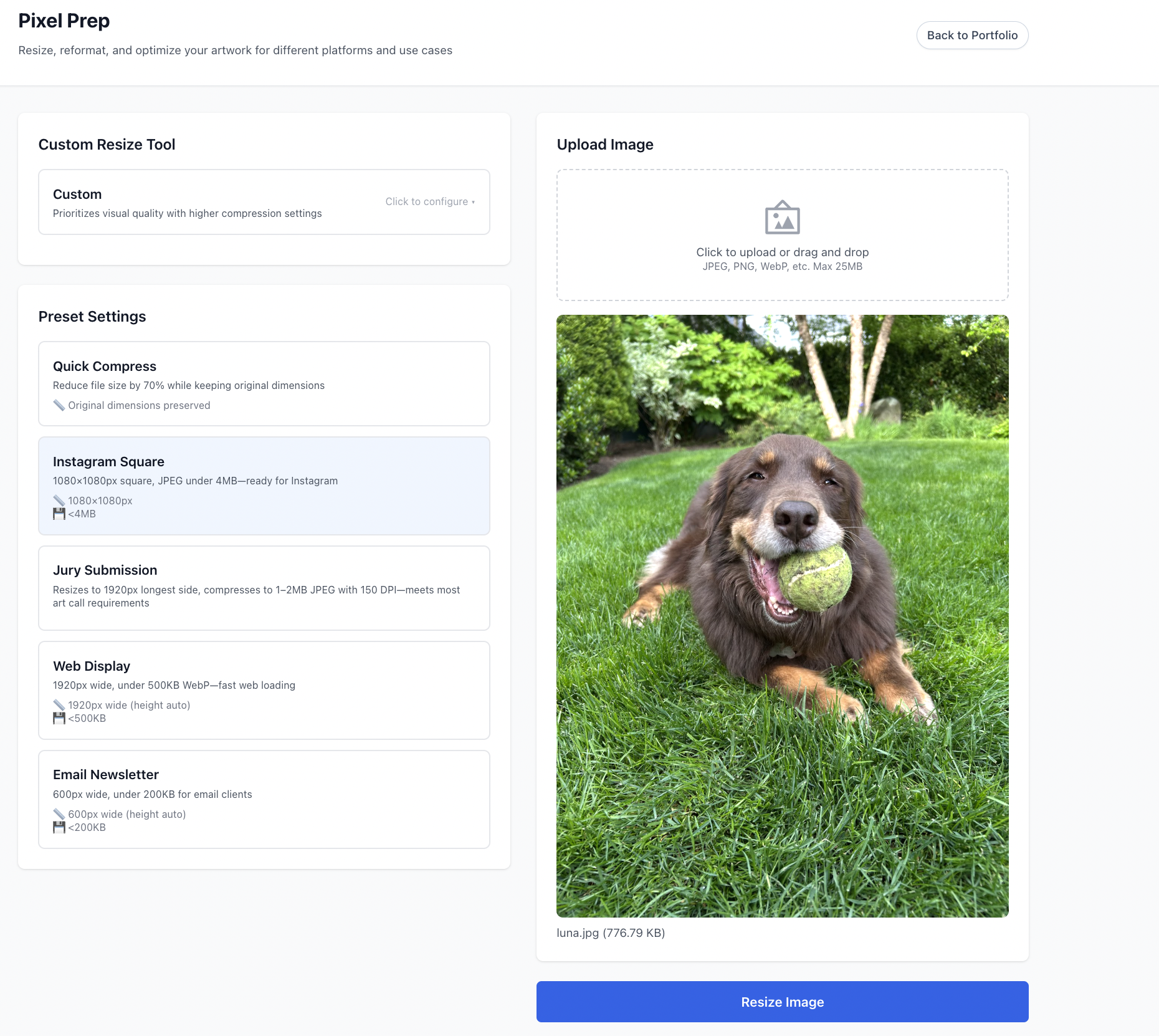
EntryThingy's built-in Pixel Prep tool (available to Portfolio subscribers) has a "Jury Submission" preset that outputs a 1920px JPEG in the 1–2MB range, which meets requirements for most calls.
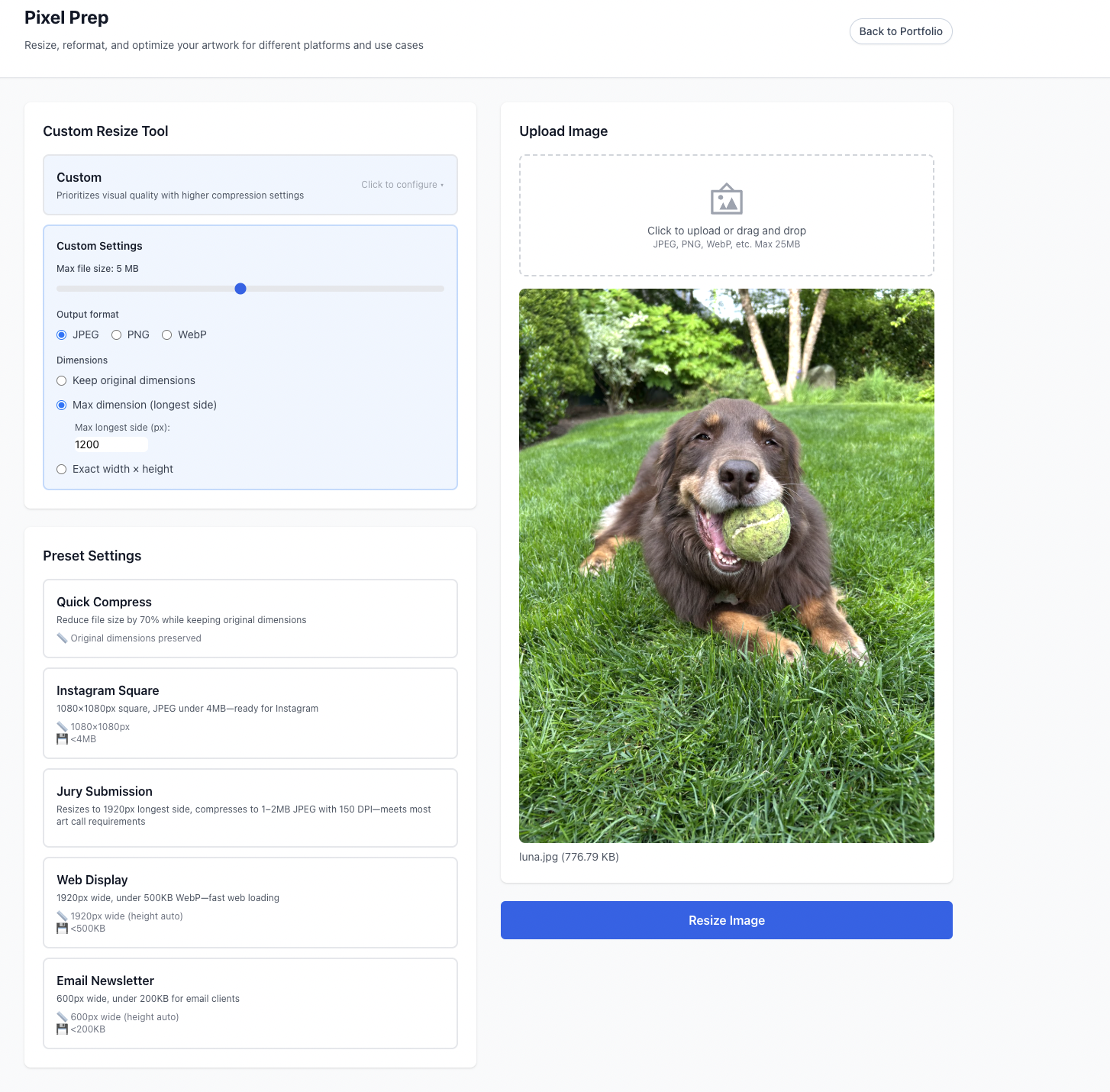
You can also set your own specs using the custom settings panel, which is useful when a call has specific dimensions or file size requirements that don't match a preset:
If you want a full walkthrough of the photography and resizing process, including free tools you can use today, our guide on how to photograph and resize art for submissions covers everything from camera settings to batch resizing.
Reason #5: Your Artist Statement Didn't Help the Juror Understand the Work
An artist statement has one job: help the juror connect your work to your intent. That's it.
The most common problems aren't that the statement is bad writing, but most are too vague, too academic, or too long. A juror reviewing 200 submissions isn't going to slow down for a 600-word philosophical letter. They need a clear, specific sense of what you're making and why.
What to avoid:
- Vague language that could apply to any artist ("I explore themes of identity and memory")
- Academic jargon that distances the reader from the work
- Focusing on process at the expense of meaning
- Statements longer than 200 words when the call doesn't ask for more
Read your statement back and ask: does this help someone understand these specific pieces, or does it describe art-making in general?
Here is an example of a statement that does exactly that. The artist below names her medium, her specific subject (the coastal landscape of Vancouver Island), and explains how her process connects to the work. A juror reading this knows exactly what to expect before seeing a single image.

You can browse more artist statements and portfolios from artists on EntryThingy at entrythingy.com/artists for more real examples of what works.
Reason #6: You Chose Quantity Over Fit
This is the pattern that holds a lot of artists back, and it's worth being direct about it.
Submitting everywhere, to every call, regardless of fit, is a pattern that wastes entry fees, dilutes your energy, and produces rejections that teach you nothing.
The artists who build consistent exhibition records tend to do the opposite. They research before applying. They choose calls where there's real alignment between their work, the juror, and the gallery. They treat each submission as something worth preparing properly rather than something to get out the door.
The goal is not more submissions. The goal is better submissions.
This shift in approach is also reflected in the data. Artists with more submissions on EntryThingy are accepted at higher rates, but that's not because volume helps directly. It's because artists who keep applying tend to get better at selecting the right opportunities and presenting their work well. The practice of applying strategically is what compounds over time.
Red Flags to Watch Before You Apply
Not all rejections are about your work or your presentation. Some calls are simply not worth applying to.
Look out for:
- No juror listed, or juror is vague ("a panel of experts")
- No information about what happens if you're accepted (exhibition dates, shipping, commission)
- Entry fee with no clear explanation of what it covers
- Gallery with no web presence, no social media, no exhibition history
- Promises of "exposure" without specifics
- Pressure to pay quickly or decision timelines that seem off
Our guide on how to spot scam calls for art covers the full list of warning signs. And our roundup of trusted art call platforms is a good starting point if you want to know where to find legitimate opportunities.
On EntryThingy, every call is reviewed before it goes live. Fees, deadlines, eligibility, and organizer information are disclosed upfront.
Ready to find calls that actually fit your work? Browse verified art calls filtered by medium, location, and deadline — so you're starting with opportunities that make sense for your practice.
Browse Art CallsWhat To Do After a Rejection
The most useful thing you can do after a rejection is treat it as data, not a verdict.
Ask yourself:
- Was this a good fit for my work in the first place?
- Did I research the juror before applying?
- Were my images as strong as they could be?
- Did my portfolio feel cohesive?
- Did my statement actually help a juror understand this work?
If the honest answer to any of those is no, that's the thing to fix before the next submission. Not the work itself.
Many artists who build strong exhibition records have dozens of rejections behind them. The difference isn't that they stopped getting rejected. It's that they got better at applying and more strategic about where they applied.
Common Questions About Art Call Rejections
Why do galleries reject good work?
Acceptance decisions depend on fit, not just quality. A juror's personal background, the gallery's programming history, and how your work connects to the specific theme or audience all factor in. Strong work gets rejected from shows that weren't the right context for it.
Does rejection mean I should change my work?
Not necessarily. If the same issues come up repeatedly — like poor image quality or an unclear statement — those are worth addressing. But if the work itself is consistent and strong, the more likely fix is choosing better-matched opportunities.
How many art calls should I apply to?
There's no target number. The better question is whether each call you apply to is genuinely a good fit. Ten well-researched applications will almost always outperform 40 untargeted ones.
Do galleries give feedback when they reject you?
Rarely. Most shows don't have the capacity to give individual feedback across hundreds of submissions. If feedback is offered, it's worth taking seriously. If it isn't, the analysis has to come from you.
Where can I find art calls that are worth applying to?
EntryThingy lists verified calls with fees, deadlines, eligibility, and medium requirements shown upfront. You can filter by medium, location, and deadline before you apply.