
A successful call for artists gives people enough information to decide whether the opportunity is right for them and apply.
In this article, you'll learn what to include in your call, why each detail matters, and how to clearly explain everything from eligibility and entry fees to important dates, accepted media, jurying, sales, and artwork delivery. You'll also get a free checklist at the end that you can adapt for your next call.
How did I build this guide?
To put this guide together, I reviewed real calls published on EntryThingy, along with the questions artists ask before applying.
EntryThingy works with more than 2,500 galleries and arts organizations and 166,000 artists, including thousands with public artist profiles. This gives us a clear view of what galleries need to explain and what artists want to know before submitting their work.
I used those patterns to group the most important details into a practical checklist you can follow when writing your own call.
1. Use a Specific Title and a Strong Cover Image
Your title and cover image are the first things artists see. They may feel like small details, but they can determine whether the right artists open your call or keep scrolling.
Write a title that explains the opportunity
You should avoid generic titles that give artists no context.
Weak: Call for Artists
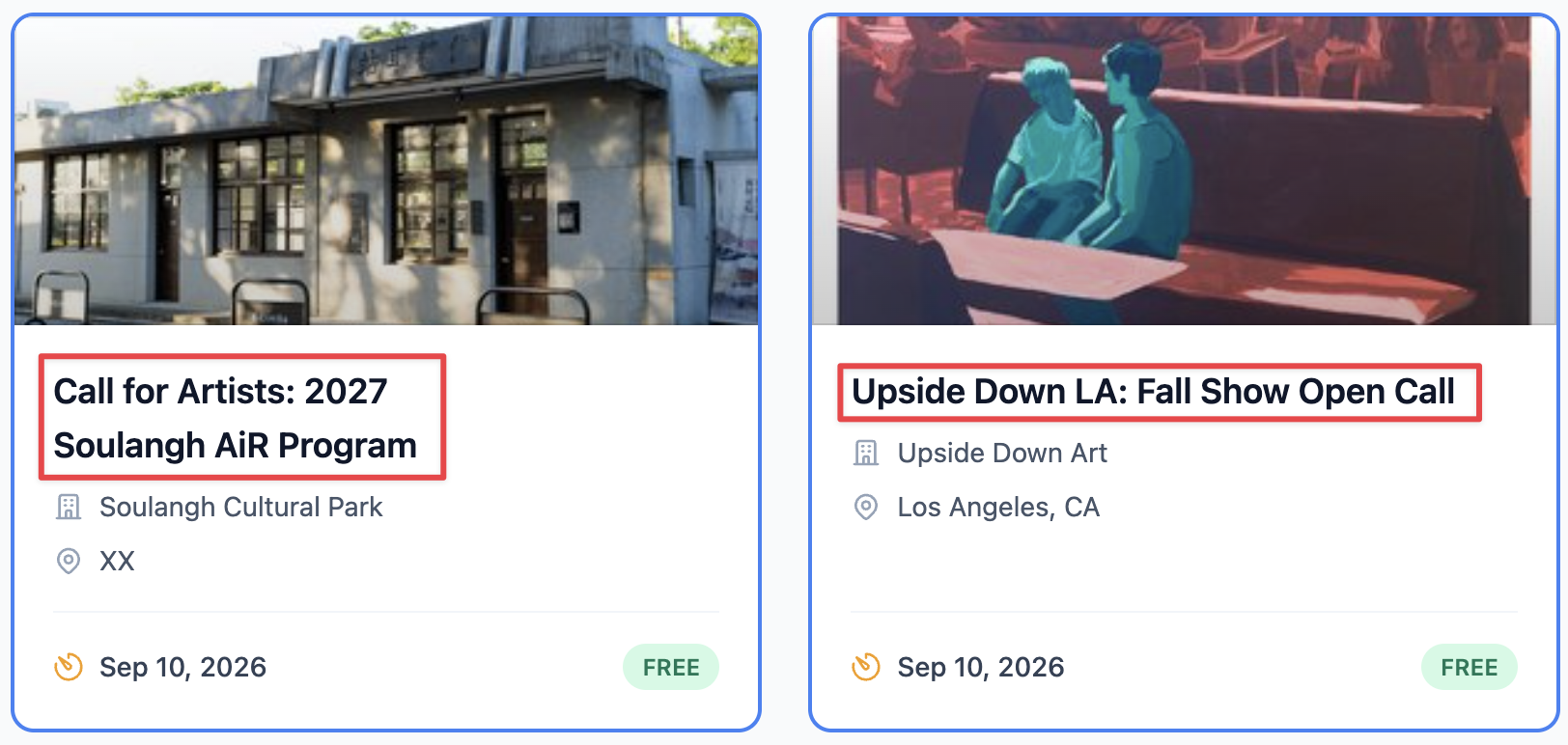
Strong: Upside Down LA: Fall Show Open Call
From the stronger title, artists know this is an open call for a fall exhibition in Los Angeles. They can quickly decide whether it might be relevant to them before reading the full description.
You can follow this simple title formula:
[Exhibition name or theme] + [location, season, or year] + [type of opportunity]
You don't need to include every detail. Choose the information that helps the right artists recognize whether the call may be relevant to them.
Choose an image that represents the call
You can use an artwork related to the theme, a photograph from a previous exhibition, a picture of your gallery, or a simple event graphic.
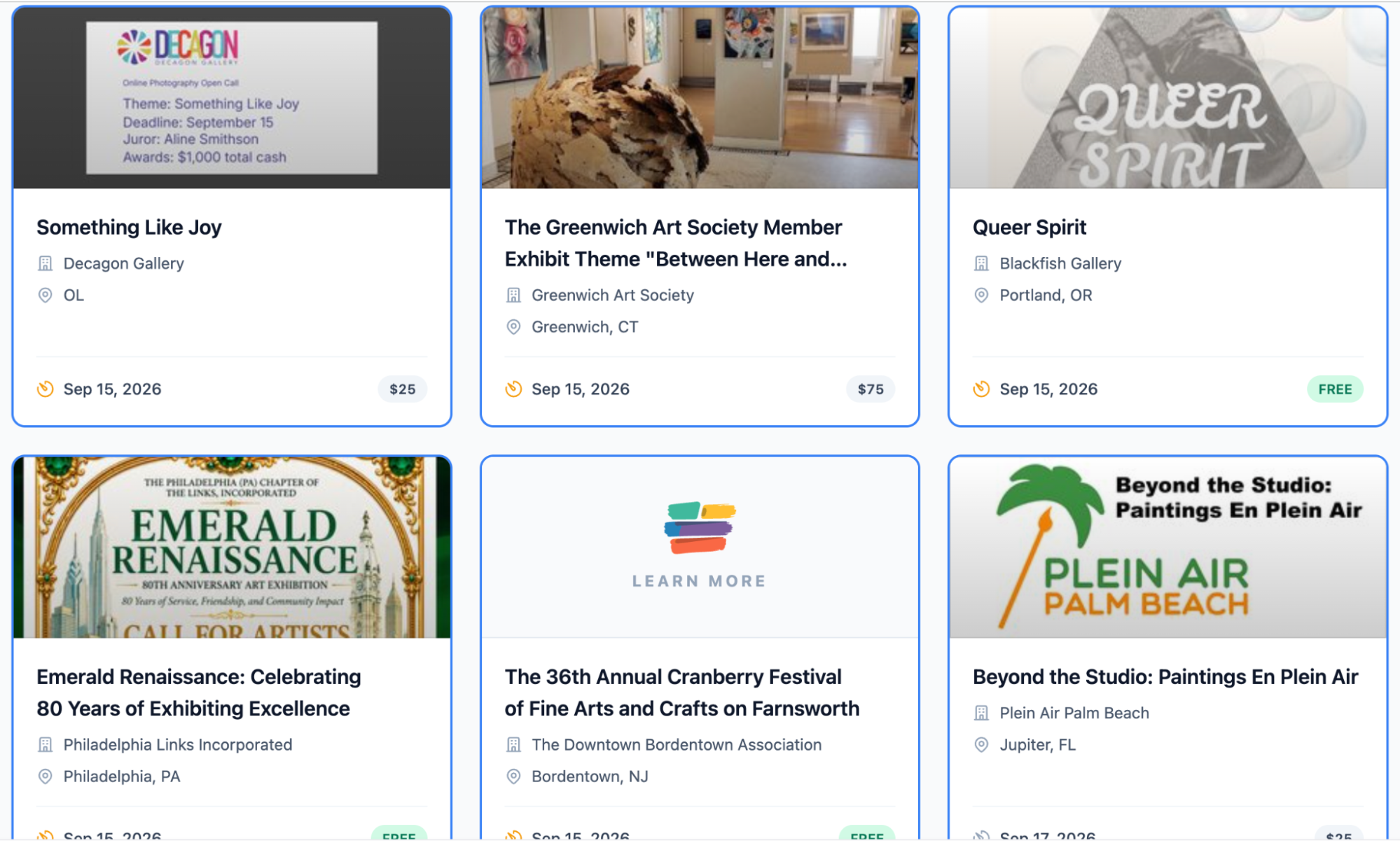
For example, you can see the difference when browsing current calls for artists on EntryThingy. Calls with a custom image are easier to notice, while a call using the default image can disappear between them.
Plus, we share calls on EntryThingy's Instagram, so a strong image can help your opportunity reach more artists there, too.
Your cover image can be:
- One strong artwork that reflects the theme
- A photograph from a previous exhibition
- A picture of your gallery or exhibition space
- A simple exhibition graphic or official event poster
Artists will often see your cover image as a small card first, so make sure it still looks clear and catches their attention at that size. Avoid long blocks of text, low-resolution files, and artwork you do not have permission to use. Add descriptive alt text whenever the website or submission platform provides that option.
2. Explain the Opportunity, Organizer, and Location Right Away
Once an artist opens your call, the first few sentences should tell them what the opportunity is, who is organizing it, where it takes place, and who it is for.
The main point is to describe the opportunity immediately. Say whether you are offering an exhibition, competition, residency, commission, publication, or another type of opportunity. Include the theme or focus when there is one.
Name the organizer
Include the full name of the gallery or arts organization running the call. Artists often research organizers before applying to look at previous exhibitions and confirm that the opportunity is legitimate.
State the location clearly
For a physical exhibition, include the venue, city, and state or country. If the opportunity is online, say that directly.
Link to your website or public gallery profile
Give artists somewhere to learn more about your organization and the work you usually present.
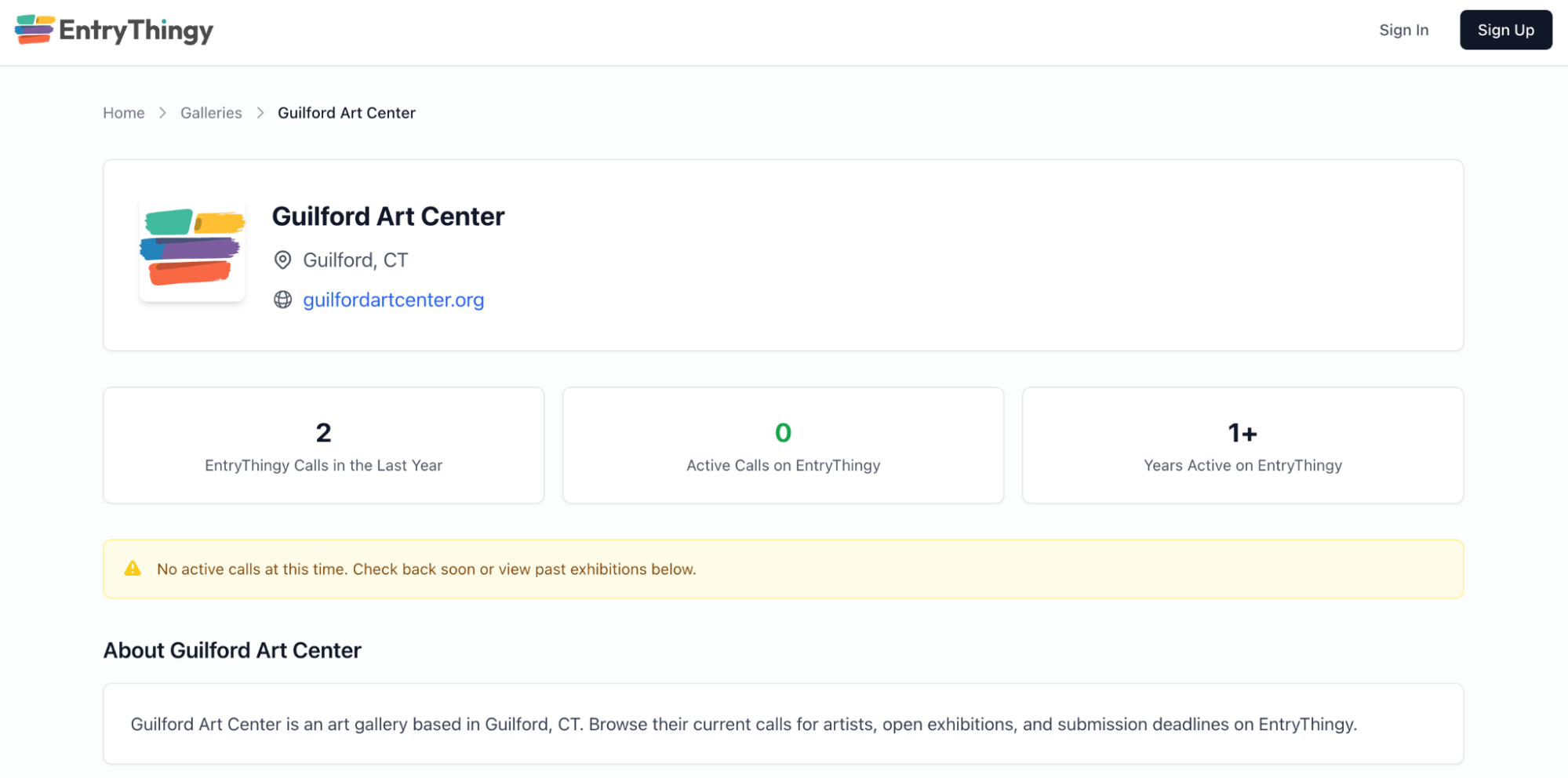
Artists can then visit the gallery's website and review its location, current calls, previous calls, and activity on EntryThingy. This extra context helps them understand who they would be working with before they submit.
3. Give Artists Complete Call Guidelines
After the introduction, give artists the specific details they need to check their eligibility and prepare the application.
Eligibility: Location, age, membership, career stage, and other restrictions.
Accepted work: Media, theme, dimensions, originality, creation dates, AI policy, and presentation rules.
Submission requirements: Number of pieces, images, file types, statement, bio, CV, portfolio, or proposal.
Selection: Name the jurors when possible, include a short background for each one, explain the criteria they will use, and state whether the review is blind. Tell every applicant when and how they will receive a decision.
Dates and responsibilities: Include the exact application deadline, closing time, and time zone, along with the date when artists can expect a decision.
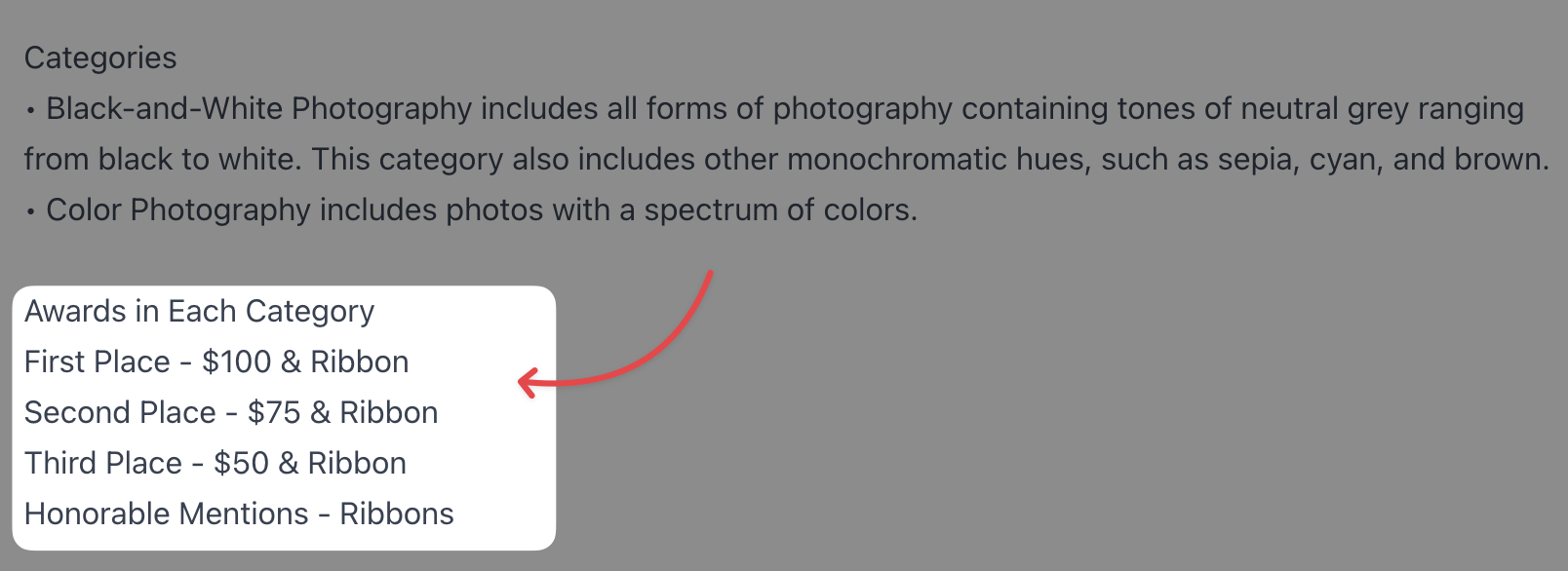
Terms and permissions: Explain copyright ownership, how images of selected work may be used for promotion, insurance and liability, cancellation terms, and what happens if an artist withdraws after being selected.
What happens if an artist is selected: Explain the next steps, including artwork delivery, framing, installation, insurance, collection, and any events the artist is expected to attend.
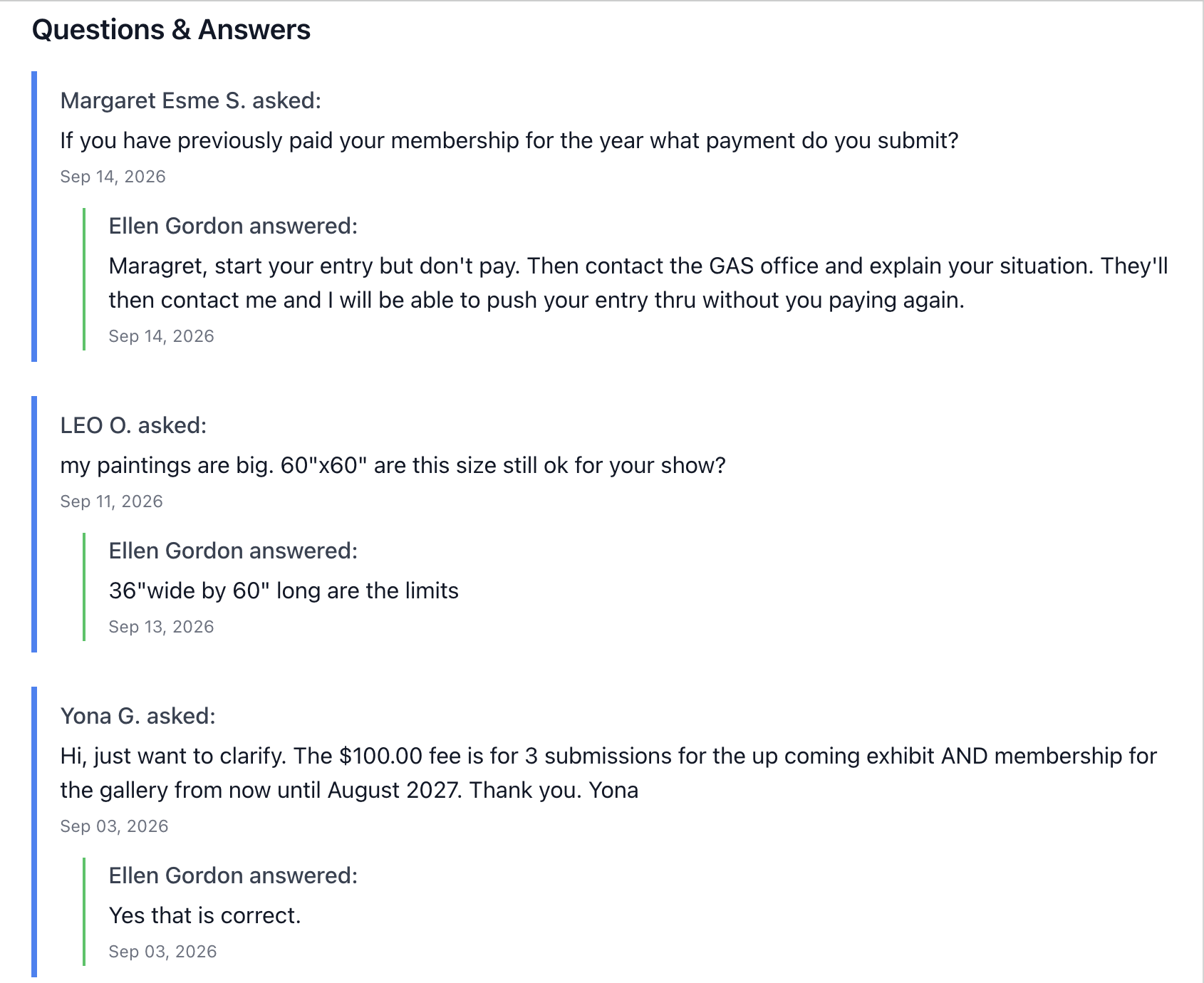
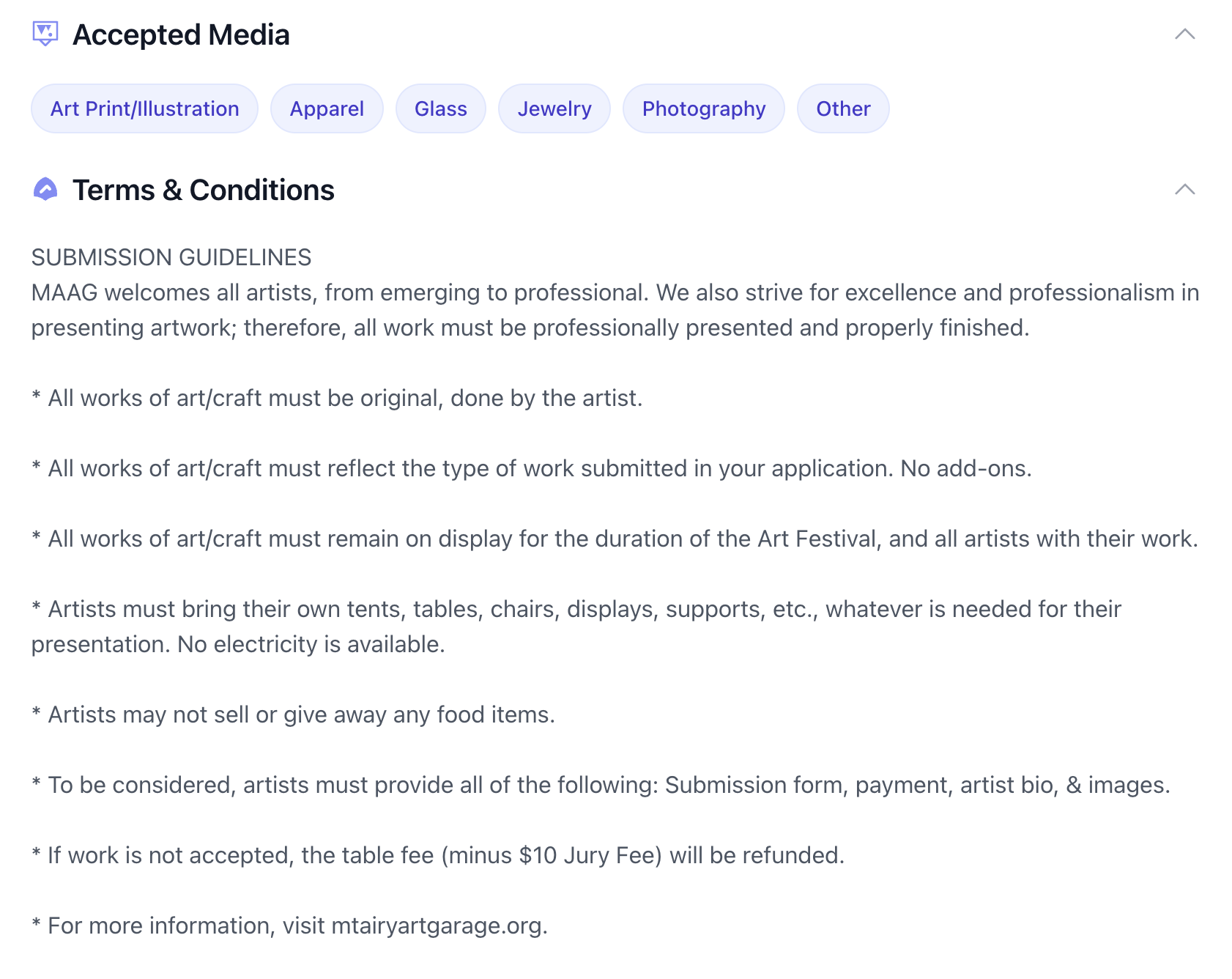
EntryThingy organizes these details into separate sections for Important Dates, Submission Requirements, Instructions, Accepted Media, and Terms & Conditions. Artists can quickly open the information they need, and they can add important deadlines and exhibition dates directly to their calendar.
4. Be Transparent About Entry Fees, Benefits, and Sales Terms
Artists should understand the full cost and potential value of an opportunity before they begin an application. That includes the entry fee and any later costs they may face if selected.
Entry fee: Say whether the call is free or paid. If it is paid, list the base fee, how many artworks it includes, additional-piece fees, discounts, and refund policy.
What selected artists receive: Explain whether artists receive an exhibition, cash prize, publication, promotion, sales opportunity, or another benefit.
Sales and commission: State whether the work must be for sale, the gallery's commission, who handles taxes, and when artists will be paid.
Additional costs: Explain who pays for shipping, return shipping, framing, installation, insurance, travel, or any other participation expenses.
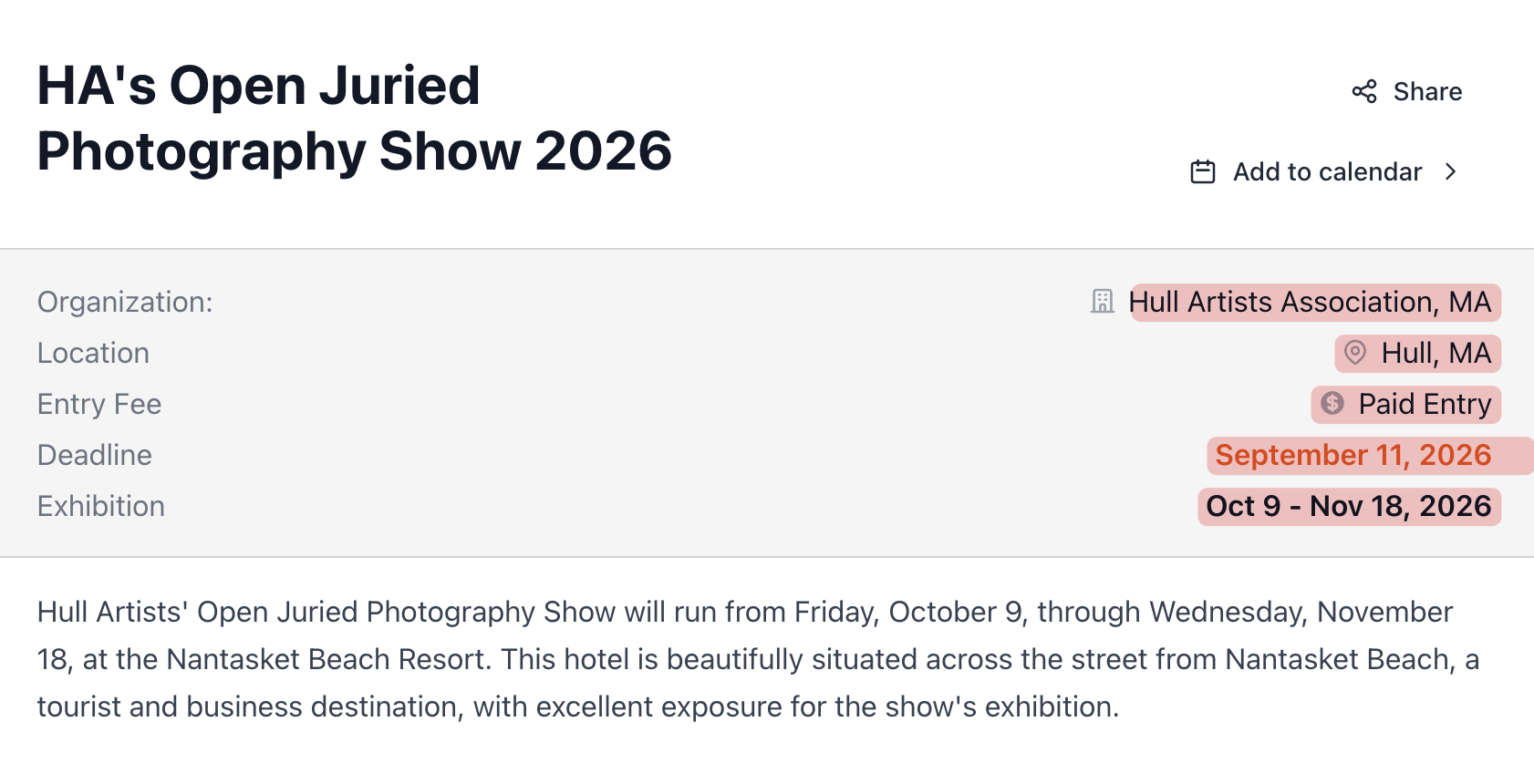
On EntryThingy, every call is clearly marked as Free Entry or Paid Entry. Galleries can also collect entry fees directly through Square or PayPal and create coupon codes when they want to offer a discount.
5. Make It Clear How Artists Can Apply and Ask Questions
End your call with a clear application path. Artists should know exactly where to apply, what account or payment steps are required, and who to contact if something is unclear.
Add a direct application link: Send artists straight to the application instead of making them search your website.
Explain the process: Mention whether they need to create an account, upload files, answer additional questions, or pay before submitting.
Provide contact information: Include a contact name and email address for questions about eligibility, artwork, or application issues.
Confirm every submission: Let artists know their application was received and explain what happens next.
Explain where to request help or accommodations: Tell artists who to contact if they need an accessible application format or support completing the process.
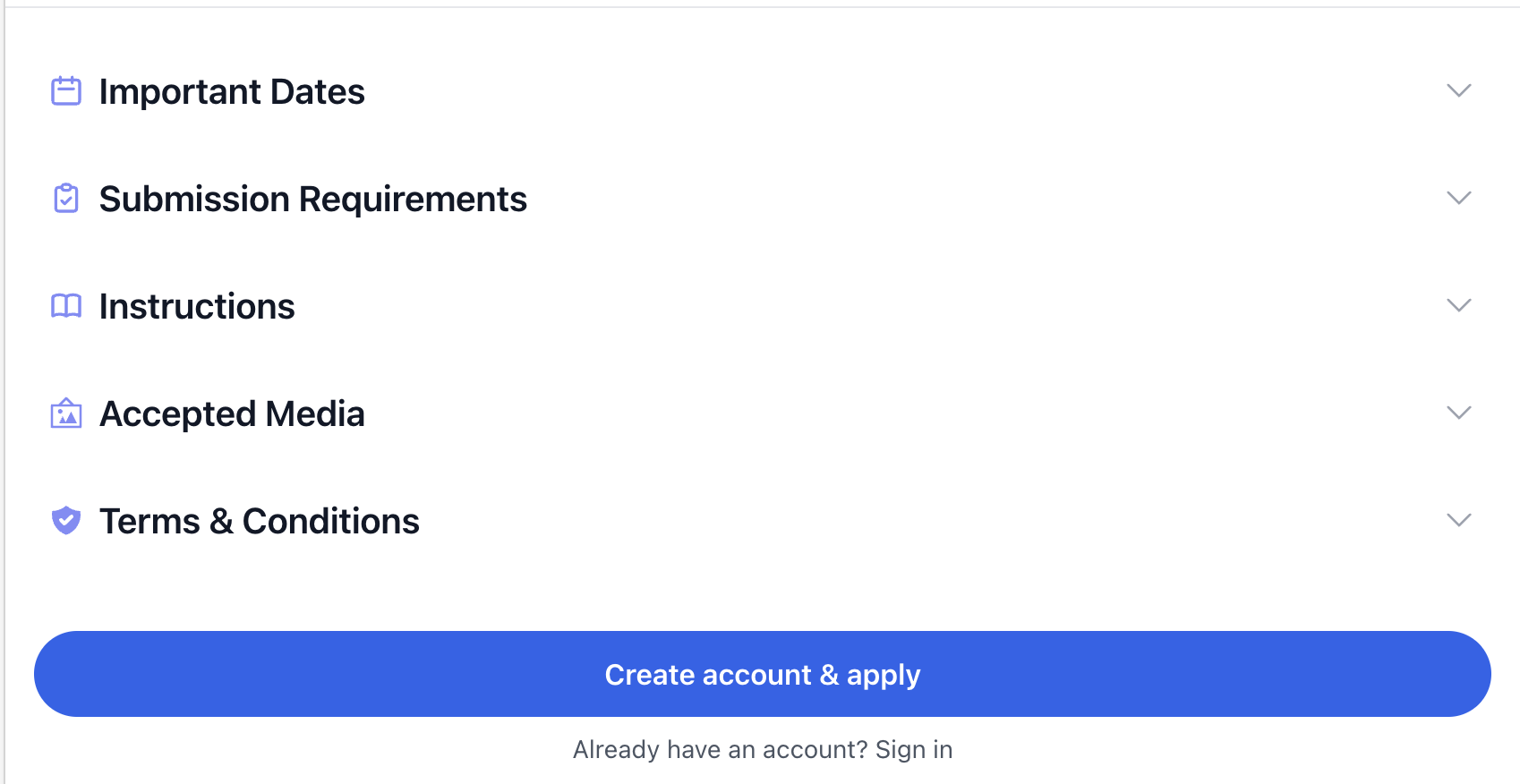
On EntryThingy, artists can apply directly from the call page and use the public Q&A to ask about the opportunity. This works well for questions that may help other applicants too, such as artwork size limits, eligibility, membership fees, or delivery requirements.
For questions involving private information or technical account problems, give artists a direct email address or point them to platform support. Galleries can also customize the submission confirmation email with next steps, important dates, or anything else artists need to know after applying.
Free Call for Artists Checklist
Use this table as a final checklist when writing your call. Complete every section that applies to your opportunity before you publish it.
| Information | What to Include |
|---|---|
| Call basics | Title, opportunity, organizer, website, and location |
| Who and what qualifies | Artist eligibility, accepted media, theme, dimensions, and artwork rules |
| Application materials | Number of pieces, images, file types, artwork details, statement, bio, CV, portfolio, or proposal |
| Fees and other costs | Entry fee, included artworks, additional fees, discounts, refunds, shipping, framing, installation, insurance, and travel costs |
| Benefits and sales | What selected artists receive, prizes, sales terms, and commission |
| Selection | Jurors, evaluation process, and how applicants will be notified |
| Timeline, terms, and next steps | Deadline, closing time and time zone, notification and exhibition dates, delivery, collection, copyright and image-use permissions, cancellation, and withdrawal terms |
| Application and contact | Direct application link, submission steps, confirmation email, contact person, and where to request technical or accessibility support |
EntryThingy helps galleries create a clear call page, collect applications and entry fees, invite jurors, and manage submissions from one place.
Create your call on EntryThingy